

Published on Sep 25, 2025

Prasanta R
10 Ways Startups Sabotage Their Brand on Socials — And Easy Fixes with AI
Social media is usually the first place startups try to build their brand — yet it’s also where they make the most mistakes. One day the posts feel fun and casual, the next it’s a cold sales pitch. Some startups chase trends with no clear voice, and others post great stuff but at the wrong time.
All of this makes it harder to build trust, stay memorable, or even show up on people’s feeds.
In this blog, we’ll cover the most common branding mistakes startups make on social media.
What “Good” Looks Like on Social for Startups
Good social media doesn’t scream for attention — it makes things easy to understand. When someone new lands on your profile, they should instantly get what you do, who you’re for, and what makes you stand out.
Your tone feels like it’s coming from one real person. The look also stays consistent – same fonts, same feel, same layout — so people remember you without even reading the name.
Your posts actually help. They give quick answers, simple steps, or small wins people can use right away. You show up regularly, not randomly. And when people comment, you respond like ahumaan.
When your feed looks and feels like this, people save and share your content because it helps them do something better today.
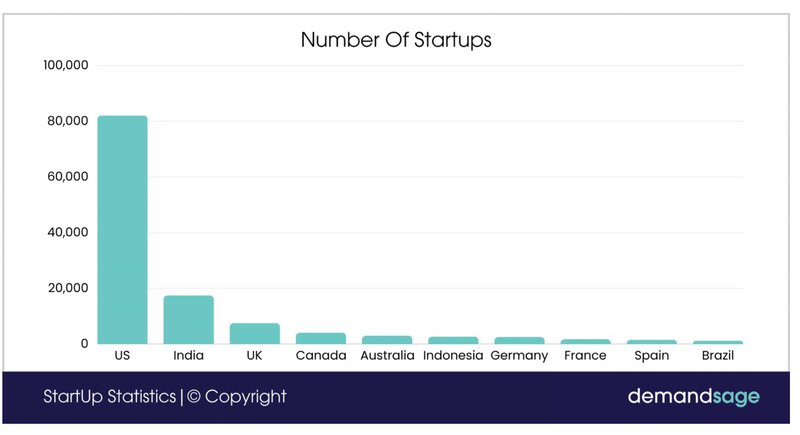
Image Source: Demandsage
There are over 80,000 startups in the US — and a huge chunk of them are fighting for attention in the same crowded space… Silicon Valley. When everyone’s using social media to talk, promote, and sell, standing out isn’t just hard, it’s survival.
That’s why your social presence needs to do more than just exist. It has to be sharp, consistent, and actually valuable if you want to grow, attract the right people, and drive real revenue.
Now that we’ve covered what good social looks like and why it matters, let’s talk about the common mistakes startups make and how to avoid them.
Mistake 1: Inconsistent Brand Voice and Visuals
If one post sounds formal and the next sounds casual, or your colors keep changing every week, it becomes hard for people to recognize or remember you. That lack of consistency makes your brand feel random.
Start by creating a simple one-page voice guide. Write down how you speak, what phrases you like using, and what you avoid. You can even drop a few of your best posts into an AI tool and ask it to pull out key patterns in your tone.
Then set a basic visual style. Choose one font pair, a few core colors, and a small set of layout styles you can reuse. Extracting a color palette from image sources can further help maintain consistency and strengthen your brand identity across all posts. Tools like Canva, Adobe Firefly, or Figma can help you build templates so every new post feels like it belongs with the rest.
Before posting, run each caption through an AI tone check to make sure it matches your brand voice and sounds clear, natural, and to the point. Keep sentences active and easy to read.
Then drop the polished text into your design templates, and take a final look at your overall grid. Make sure everything feels balanced and connected—so no post looks out of place.
Over time, this steady process builds recall. As Anthony Mixides, Founder & CEO of Bond Digital Web Design FZCO - Web Design Dubai, says, “People start to recognize your posts without seeing your name, and your feed begins to feel like a coherent brand rather than a string of isolated updates.”
Mistake 2: Chasing Trends That Dilute the Brand
Trends often promise quick reach. But chasing every viral moment can backfire fast. If a meme, sound, or joke has nothing to do with what you offer or who you’re speaking to, it only creates confusion. Your audience won’t get the joke, and worse, they might stop trusting what you stand for.
Before jumping on a trend, pause and ask:
- Does this align with our brand voice and values?
- Will our audience actually care or relate to this?
- Could this feel tone-deaf or off-message?
Use AI to rate the trend on brand fit, audience relevance, and potential risk. If it scores low, skip it. If it scores high, rework it in your own style — use your language, your colors, your point of view — so it still feels like you.
As Jack Johnson, Operations Director at RhinoRank, “When a brand chases every new trend, it might get likes in the moment but it rarely earns lasting authority. The same is true in SEO—you don’t build strong backlinks by following quick fads, you build them by showing consistency and relevance. Startups that treat social content the same way, aligning every trend with their core message, end up building trust that lasts far beyond a single viral post.”
Write two or three versions of your caption and use AI to gauge how your audience might respond. Focus on clarity, tone, and whether there’s a clear takeaway. If any version feels off, confusing, or risky to your brand’s reputation, tweak it or drop it.
Framing trends this way helps you stay relevant without losing who you are. You still get reach, but it’s aligned with your message.
Mistake 3: Slow or Generic Replies to Followers
A new brand grows through real conversations. Slow replies and copy-paste answers make people feel unseen. You lose momentum and the algorithm learns that your page is quiet.
“Set yourself up to respond quickly with helpful context. Use AI to group incoming messages by intent and language, so you can see what needs a quick thank-you, what needs a how-to, and what needs a human reply from a founder or specialist”, says Ernestas Duzinas, Founder/CEO of GoTranscript Inc on the importance of clear and on-time communication.
Draft warm responses that sound like you, not a template. Let AI suggest a first pass, then edit a line or two so it reflects your voice guide.
For sensitive or complex questions, step in directly and close the loop with a clear next step. Track two simple numbers: average response time and resolution rate.
If both improve, your brand feels more alive. Over time, these small, fast, human replies turn casual followers into loyal ones, and your comments section becomes a quiet engine for reach, trust, and sales.
Mistake 4: Content That Sells, Not Serves
When every post pushes a product, people tune out. A startup earns attention by helping first and selling second.
As Marissa Burrett, Lead Design for DreamSofa, says, “If your feed is full of discounts, feature dumps, and “buy now” graphics, you’ll see low saves and weak comments, even if impressions look fine.”
Shift the center of gravity toward usefulness. Look at the questions your customers ask in emails, DMs, and support tickets, then turn those into short, simple posts that solve one problem at a time.
Use AI to scan past conversations and surface common themes you can teach on. Keep the language plain, show quick steps or small wins, and add a clear takeaway so someone leaves smarter than they arrived.
When you do mention your product, do it as a natural next step, not the headline. Over a few weeks, you’ll notice more saves and shares, which are stronger signals of value than likes.
That momentum makes later sales posts land better, because people already trust you to be helpful.
Mistake 5: Posting Without a Real Audience Persona
If you don’t know who you’re talking to, your message gets thin and broad. That’s when posts feel generic and miss the people who would love you most.
As LJ Tabango, Founder & CEO of Leak Experts USA advises, “Start by defining one clear persona for each platform, not a collage of everyone. We often use AI to cluster followers’ comments and questions into groups, then write a one-page snapshot for the primary group on each channel. That way, we know who we are speaking to and what they’d like to hear from us.”
Include what they want, what they worry about, and what would make them trust you. Let that guide your examples, tone, and calls to action. A founder-led tool might speak more directly on Twitter, while a parent-focused app may use calmer language and clearer visuals on Instagram.
When your content speaks to a real person with a real context, engagement rises because the message finally fits. The same effort also reduces risk, since you’ll avoid claims or jokes that land poorly with the people you actually need to reach.
Over time, a strong persona makes your social feel focused, familiar, and worth following.
Mistake 6: Irregular Posting and Bad Timing
Random bursts make your feed look active for a day and empty for a week. Audiences and algorithms both prefer steady rhythms. If your posts arrive at odd hours or disappear for long gaps, people stop expecting you and engagement fades.
In sensitive business types or scenarios, timely posts are even more important. When asked, Sam Bishop, from Forever Urns, shared, “The simple fix is to decide on a light cadence you can actually keep, then protect it. Two or three quality posts per week beat a flurry followed by silence.”
Let your analytics guide the clock. Check when your followers are most active and schedule around those windows so your best work lands when eyes are open.
Build a small buffer of evergreen posts so you never miss a slot when you’re busy. If a week goes sideways, repurpose something useful you already made, like turning a strong comment thread into a quick tip.
Over time, this regular beat trains your audience to look for you, and your reach becomes more stable because you show up when it counts.
Mistake 7: Ignoring Safety, Privacy, and Compliance
Nothing harms a young brand faster than unsafe content or a privacy slip. A single risky comment, a careless claim, or an image that reveals more than it should can trigger reports and erode trust.
As Noam Friedman, CMO of Tradeit, says, “Treat safety like part of branding, not an afterthought. Before you publish, scan captions and visuals for sensitive terms, private data, and claims that need proof. In an industry like ours, like trading or finance, it’s even more crucial as you’re responsible for sensitive banking info or funds.”
Keep permissions clear when you feature users or partners, and avoid sharing content that includes minors or private locations without written consent.
Set simple rules for your comment section and enforce them fairly so your pages feel respectful. When you use AI to help review posts and monitor replies, keep a human in the loop for edge cases and escalate anything that could harm someone.
If you ever post something that misses the mark, acknowledge it plainly and fix it fast. Brands that protect their community send a powerful signal: you can trust us.
That confidence is part of your identity, just like your colors and tone, and it pays off in loyalty that marketing alone can’t buy.
Mistake 8: No Crisis Readiness
Small brands assume crises won’t happen to them, then get blindsided by a fast comment thread or a critical post that spreads. When you react late or defensively, the story runs without you.
Rameez Ghayas Usmani, Director of Link Building at HARO Link Building, says, “Treat crisis readiness like insurance. Start by deciding who speaks for the brand and where they’ll speak. That’s one of the foundational steps for great PR.”
Keep a short, calm explanation ready for common situations, like shipping delays, feature outages, or a misunderstanding in a post.
Use AI alerts to spot unusual spikes in mentions or negative sentiment so you see trouble early, not after it trends. When something breaks, respond in plain language, name what happened, and share the next step you’re taking.
If people ask for updates, give them a time window and return with new information even if the fix is still in progress. Avoid long apologies that shift blame or promise more than you can deliver. Your goal is to show you are listening, you are acting, and you care about the impact.
Brands that handle one tough moment with clarity and speed often gain more trust than they had before, because people remember how you showed up when it was hard.
Mistake 9: Treating Social as a One-Way Megaphone
If your feed only broadcasts announcements, you miss the best part of social: learning from your audience in real time. Comments, DMs, and reviews are free research.
When you ignore them, you keep guessing what people want and keep posting content that skims past their needs. Flip that pattern. Read threads with the same focus you use to write posts.
Daniyal S, Founder & CEO of Qwoted Link Building Service, shares important insights, “Look for repeated questions, points of confusion, and small wins people celebrate. Turn those into clear tutorials, quick fixes, and before-and-after stories with your product in the background, not the headline. We often do this when we respond to journalists with a story-worthy quote on behalf of our clients.”
Close the loop when someone shares a bug or a concern by showing what you changed and why it helps. If a suggestion isn’t a fit, thank them and explain your reasoning in one sentence so they feel heard.
Over time, your audience becomes part of your product and your message, which makes your content naturally more relevant. Engagement rises because people see themselves in your posts, and you build a brand that listens rather than shouts.
Mistake 10: Chasing Vanity Metrics Only
It’s tempting to focus on follower counts, likes, and views because they look impressive at first glance. The problem is these numbers don’t always move the business forward. A post can pull in thousands of likes yet bring zero new sign-ups or sales. Startups that measure success only by vanity metrics often feel busy without building traction.
Instead, shift your focus to signals that show real value: saves, shares, comments with intent, click-throughs, and even response time to messages. These are the numbers that reveal whether people trust you enough to act.
AI tools can help here by analyzing sentiment, grouping engagement by type, and flagging which posts led to meaningful actions.
When you track these insights week after week, you can refine your content strategy with confidence. Growth then feels steady and intentional, rather than inflated by empty numbers.
Wrap-Up: Building a Brand That Lasts
Your social presence is often the first impression someone gets of your startup, and those early impressions matter more than you think.
Avoiding common mistakes like posting off-brand content, chasing trends blindly, ignoring safety, or measuring the wrong things—can save you months of wasted effort. With the right balance of clarity, consistency, and trust, supported by smart AI tools, you can build a feed that people look forward to seeing.
Start small: define your voice, set a simple posting rhythm, and make engagement genuine. Over time, these habits turn scattered posts into a brand story that feels steady, safe, and worth following.
If you want to protect your reputation while growing your reach, keep this guide close and start applying one fix at a time. Each step you take builds a foundation that not only gets attention now but also sets your brand up to last.

Safeguard Your Child Against Online Threat
Register Now Cancel Any Time
Available
on
Cancel Any Time
Available
on