
Published on Jan 19, 2026

Super Admin
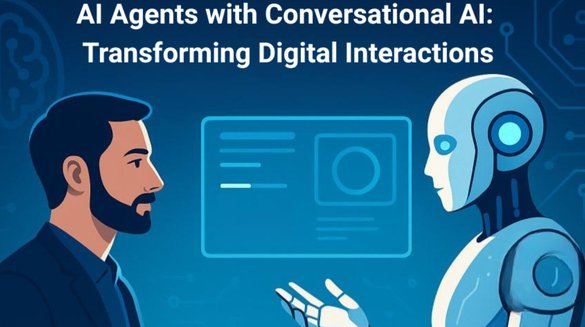
How AI Voice Agents Are Reshaping Real-Time Conversational AI
Remember the last time you called customer support and enjoyed the experience?
If you're struggling to recall, you're not alone.
The global voice AI agents market is booming, and this marks a fundamental shift in how businesses and customers interact.
AI voice agents have finally cracked the code on what we've been chasing for decades, and that’s conversations with machines that genuinely feel conversational.
In this article, we will discuss the evolution of conversational AI, how AI voice agents are reshaping human interactions, their real-world applications, and the future implications.
The Evolution of Conversational AI
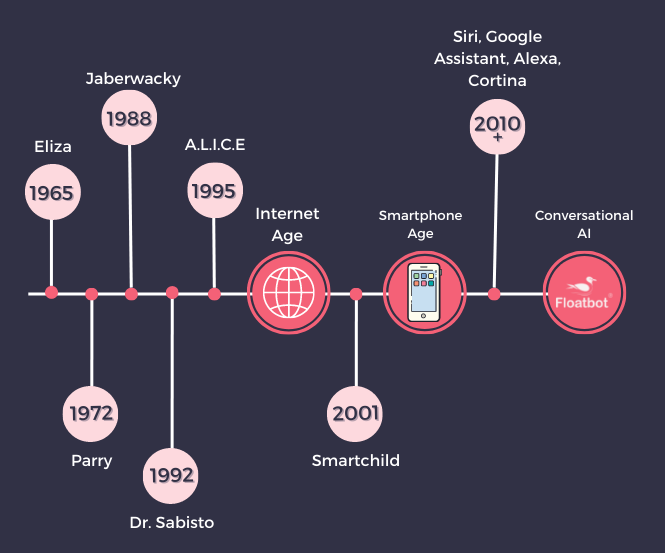
How do you feel when you call a company and receive robotic replies like "press 1 for sales, press 2 for support" on their automated systems?
Well, conversational AI has come a long way from those robotic systems that made us want to throw our phones across the room.
The journey started with interactive voice response (IVR) systems in the 1960s. They were revolutionary at that time. But they were also frustrating. You'd navigate through endless menu trees, only to end up repeating yourself to a human agent anyway.
51% of customers admit to abandoning voice calls entirely to avoid navigating an IVR system.
Then came the first wave of AI-powered voice assistants. We all know our best friends, Siri and Alexa. With this revolution, we could ask questions as if we were having conversations with humans. For example, "What's the weather today?" This experience felt magical compared to pressing buttons.
But these intelligent virtual assistants had their limits. They could handle simple commands but struggled with context, nuance, and anything beyond their pre-programmed capabilities.
Fast forward to today, and we're witnessing something different. Modern AI voice agents leverage advanced natural language processing, machine learning, and real-time adaptation. They recognize words, understand intent, remember context, and respond with genuine conversational flow.
The technology has matured from "Can it understand me?" to "Can it solve my problem faster than a human?" And, the answer is yes.
How AI Voice Agents Are Reshaping Human Interaction
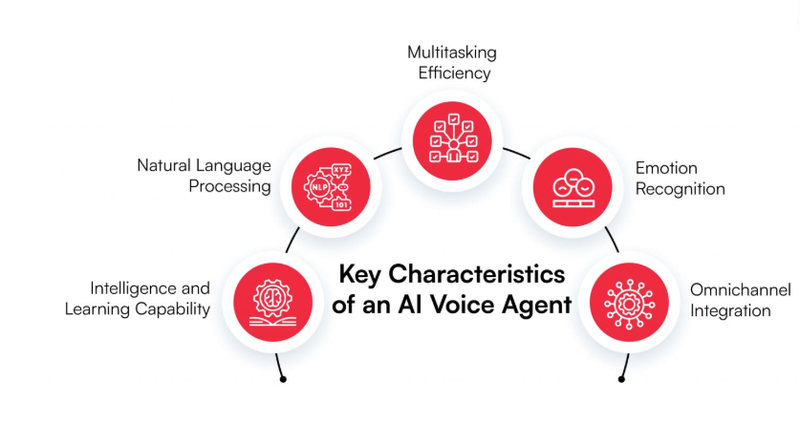
Here's where things get interesting. AI voice agents are fundamentally transforming how we perceive human-machine interaction.
Speed That Actually Matters
We live in a world of instant gratification. When someone calls for support, they don't want to wait. They immediately want answers. Leading AI platforms such as GPT-4o respond in 245 milliseconds, which matches human reflex speed.
But speed without accuracy is meaningless. The real breakthrough is AI voice assistants that can handle complex queries while maintaining fast response times. Latency plays a key role here. Some voice platforms prioritize high-quality speech generation, while others are optimized for low-latency, real-time interactions, a critical factor for live conversations where fast turn-taking matters.
The 24/7 Reality
Traditional customer service operates on human schedules. But the problem here is that customers don't wait for office hours. AI voice agents have obliterated this constraint. With voice agents, every business can always be online, as customer availability and business availability no longer have to match 1:1.
Consider a small e-commerce business in New York serving customers in Tokyo, Sydney, and London, all with the same level of personalized service including real-time support for tasks like order updates and invoicing.
Breaking Language Barriers
Here's a challenge that's plagued global businesses forever: how do you serve customers who speak different languages without hiring multilingual support teams? Intelligent virtual assistants are solving this in real time.
Modern AI voice agents speak natively. They understand cultural context, local idioms, and can even switch languages mid-conversation. A customer can start a call in English, switch to Spanish for a specific question, and the AI voice agent handles it seamlessly.
Personalization at Scale
Remember when personalized service meant someone in a small shop knew your name? AI voice agents are bringing that back.
These systems can access customer history, preferences, and past interactions instantly. When you call, they already know your last three purchases, your preferred delivery address, and that issue you reported two weeks ago. For businesses, partnering with a cross-platform development company can help integrate these AI solutions seamlessly into their customer service systems. Businesses today have access to a growing ecosystem of AI-powered customer service tools that help automate conversations, reduce wait times, and deliver more personalized support experiences.
Personalized attention would require a superhuman memory from a human agent, but for AI-powered voice assistants, it's possible at any time.
Real World Applications of AI Voice Agents in Conversational AI
Theory is great, but let's see how this technology is benefiting various industries in practice.
Customer Support That Delivers Amazing Experience
Let's start with the obvious one: customer service. Companies that implement AI in customer support reduce the average cost per interaction. But here's what's even more impressive. They're doing it while improving satisfaction scores.
When businesses use an AI voice agent, they experience a reduction in operational costs. But the real win isn't just cost savings. It's that customers are getting better service. No more hold music. No more repeating information. Just fast and accurate help.
Consider the retail sector, for example. A busy store during the holiday season can see call volumes spike 300%. With human agents, you either staff up massively ( which is expensive) or let wait times explode (customers hate it).
AI voice agents handle 10,000 concurrent calls as easily as they handle 10.
For businesses that need additional human support alongside automation, especially fast-growing online brands, an ecommerce virtual assistant can complement AI voice agents by managing escalations, manual order checks, and customer follow-ups.
Healthcare Gets Personal (and Available)
The healthcare industry faces a unique challenge. It's complex, highly regulated, and mistakes can lead to serious consequences. Yet, many hospitals use AI agents.
Why? Because intelligent virtual assistants in healthcare can handle appointment scheduling, prescription refills, basic triage, and insurance questions. These are the time-consuming administrative tasks that bog down medical staff. This frees doctors and nurses to focus on actual patient care.
Consider calling your doctor's office at midnight because you're worried about symptoms. An AI voice agent can provide initial guidance, schedule an urgent appointment if needed, or simply reassure you that you can wait until morning. It's healthcare access that doesn't sleep.
Financial Services Without the Wait
Banks and other financial institutions have embraced AI voice agents because they are efficient.
Checking your account balance, reporting a lost card, and disputing a charge are the tasks that AI-powered voice assistants handle instantly. But they're also handling more complex interactions like helping customers understand their spending patterns, explaining mortgage options, or walking someone through their first investment.
E-commerce Gets Conversational
Consider you're preparing dinner and realize you need ingredients. Instead of stopping what you're doing to browse an app, you just tell your AI voice agent, "I need pasta, marinara sauce, and fresh basil delivered tonight." It understands, confirms the order, and handles the transaction, all while you keep stirring your pot.
These intelligent virtual assistants also learn. They remember you prefer whole wheat pasta, that you're allergic to mushrooms, and that you always tip 20%. Shopping becomes a conversation, not a transaction.
The Tech That Powers the Magic
Now, you might be wondering: "This all sounds great, but what makes it actually work?" Well, platforms like Murf Falcon do.
Here's the thing about real-time conversational AI. Latency kills the experience. If there's even a half-second delay, conversations feel awkward and robotic. Murf Falcon solves this with 80 ms model latency, ensuring responses feel as natural as talking to another person.
But it's not just about speed. Falcon supports 35+ languages with true native fluency, and it can handle up to 10,000 concurrent calls without performance degradation. Most importantly, it does all this at just 1 cent per minute, making advanced conversational AI accessible even for smaller businesses.
What sets Falcon apart is its lightweight architecture that doesn't compromise on capability. While many voice APIs compel you to choose either low latency, multilingual support, scale, or cost efficiency, Falcon's compute-efficient design delivers all of them simultaneously.
With data residency in 10+ countries and on-premises deployment options, it's built for businesses that need both performance and flexibility.
The Future of AI Voice Agents in Conversational AI
So, where is all this heading? The trajectory is clear, even if the details are still unfolding.
From Reactive to Proactive
Right now, most AI voice agents are reactive. They respond when you reach out.
But the next evolution is proactive assistance. Your intelligent virtual assistant might call you to remind you about an upcoming bill, notify you about a delivery issue before you even know there's a problem, or suggest reordering something you're about to run out of.
Emotional Intelligence Gets Real
Future AI-powered voice assistants will be able to understand how you're feeling. If you are frustrated, they'll adjust their approach. If you are confused, they'll slow down and explain more clearly. If you are happy, they'll match your energy.
This will make interactions more effective by recognizing and responding to emotional context.
The Integration of Everything
We're moving toward a world where your AI voice agent is connected to everything in your digital life.
Want to reschedule three meetings because you're running late? Done. Want to find the best flight options and book one? Handled. Looking for a restaurant nearby that accommodates your dietary restrictions? Sorted.
Human agents will handle complex and high-value interactions while AI voice agents manage routine tasks.
Democratization of Advanced Technology
The most exciting development of conversational AI is that it is becoming accessible to businesses of all sizes. Startups and smaller companies can now build with the same technology that was once only available to tech giants.
The Hybrid Human AI Model
Despite AI's speed and accuracy, customers still prefer human agents for complex, sensitive, or emotional issues.
The future is one where AI and humans work together. AI voice agents will handle the first line of interaction, solving simple issues instantly and gathering context for complex ones.
When a situation needs human judgment, empathy, or creativity, the handoff to a human agent will be seamless, with the AI having already done the groundwork.
Move Forward With Confidence
AI voice agents have evolved from experimental technology to practical solutions delivering faster response times, lower costs, and higher satisfaction scores. They make conversations feel natural while operating across languages and time zones.
Ready to transform your customer interactions?
Explore how platforms like Murf Falcon can help you build ultra-fast and multilingual AI voice agents at scale. The future of conversational AI is here.

Safeguard Your Child Against Online Threat
Register Now Cancel Any Time
Available
on
Cancel Any Time
Available
on