

Published on Mar 31, 2026

Super Admin
How Creators Get More Out of Existing Footage—Without Starting Over
Most creators are not short on footage. What they often lack is a reliable way to make that footage travel—across platforms, audiences, and campaign aesthetics—without the output looking assembled rather than intentional.
That gap is where smarter repurposing decisions happen. And increasingly, it involves two distinct problems: transforming the visual style of what already exists, and adding motion to moments that work better in motion.
The First Problem: Making Existing Footage Feel Different Without Reshooting It
Product clips, brand demos, user-generated content, short testimonials—these pile up fast. The instinct is to trim, recolor, or add a filter. That approach rarely produces something that feels genuinely fresh. More often, it produces a variation that audiences sense almost immediately.
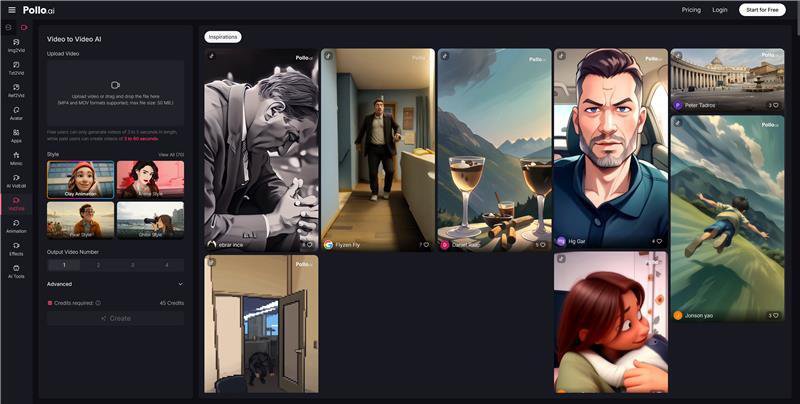
This is why some teams are moving toward tools that reinterpret footage at a deeper level. Pollo AI's Video to Video workflow is built for exactly this: transforming the visual style of existing footage without rebuilding the underlying content from scratch. Instead of reshooting a product clip to match a new campaign aesthetic, the idea is to rework the visual register while keeping the subject, motion, and structure largely intact.
That distinction matters, especially when brand consistency is part of the brief.
The Problem: Static Images That Need One More Layer
Footage transformation is one challenge. But not every repurposing decision involves a full clip. Sometimes a still moment—a product, a texture, a gesture—communicates better with just a few seconds of motion attached to it.
In feed-driven environments, motion has a structural advantage. It draws the eye and extends the moment. Short looping content achieves this without requiring a full video production setup: no script, no shoot schedule, no post-production sound design.
This applies across a range of everyday content needs:
- A creator promoting a new clothing item.
- A small brand showcasing a skincare product's texture.
- An ecommerce team is adding energy to a listing that used to sit flat.
- A social media manager looking for a low-effort way to make a post feel more dynamic.
Choosing the Right Loop Format
Not all looping formats serve the same purpose.
Boomerang-style clips play forward and then immediately backward in a short, snappy cycle. The effect is attention-catching, slightly playful, and works especially well with naturally symmetrical motion—a pour, a flip, a product spin, a bounce. The back-and-forth rhythm creates a micro-loop that the eye finds satisfying.
Seamless loops aim for invisible repetition. When constructed well, a viewer cannot easily tell where one cycle ends, and the next begins—better suited to ambient brand content or abstract visuals.
GIF-style content trades quality for portability. Useful for low-stakes communication, but visual limitations make it less appropriate where output fidelity matters.
Where a Boomerang-Style Tool Fits In
Once the format decision is made, the practical question is how to produce it without unnecessary overhead.
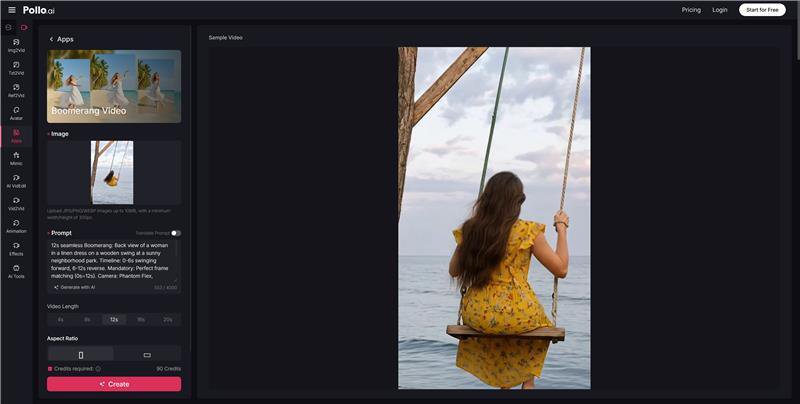
For creators who want a clean back-and-forth motion effect without a heavy editing workflow, a tool like Pollo AI's boomerang video maker can fit neatly into that process. A creator who needs a clean looping clip from existing footage should not need hours of configuration to get there.
Before using any tool for commercial content, it is worth confirming: watermark policy, export format compatibility, and licensing terms. These affect whether output can be used on brand-owned channels, paid placements, or client-facing work.
Telling a New Story with Old Footage
Sometimes, the key to reusing footage isn’t just editing—it’s reframing. The same clips can tell completely different stories depending on how they are presented.
You can:
Change the narrative with a new voiceover
Highlight a different theme or message
Rearrange clips to create a fresh storyline
For example, a travel vlog can be repurposed into a “top tips” video, a cinematic montage, or even a behind-the-scenes story.
This creative flexibility allows you to produce new content without ever picking up the camera again.
Improving Content Performance
Repurposing also gives you a second chance to improve your content’s performance. Not every piece of content reaches its full potential on the first try.
By analyzing what worked and what didn’t, you can refine your footage and present it in a more effective way.
For example:
Add a stronger hook in the first few seconds
Use better captions or thumbnails
Optimize for audience engagement
This allows you to turn underperforming content into something that resonates better with your audience.
The Practical Takeaway
The most valuable asset many creators have is footage they are already sitting on. The challenge is turning that footage into multiple usable versions—versions that travel across platforms, serve different audiences, and remain visually coherent.
Reshooting everything is rarely the right answer. Neither is relying on filters and quick edits to fake variety. The more sustainable approach combines two things: a transformation workflow that reworks visual style without demanding a full production reset, and a looping tool that adds motion to moments that warrant it.
Getting both of those right—matching tool to content type, and content type to platform—is what smarter repurposing actually looks like.
In practice, this means creators should start thinking less about producing more content and more about maximizing what they already have. Every piece of footage holds multiple possibilities—it just needs the right approach to unlock them.
By combining thoughtful visual transformation with simple motion techniques, even small teams or solo creators can maintain a consistent content pipeline without increasing workload or costs. This not only improves efficiency but also ensures that content stays relevant and adaptable across different platforms.
Ultimately, the advantage lies in working smarter, not harder. When creators use the right tools in the right context, they can extend the life of their content, improve engagement, and keep their output aligned with evolving audience expectations—without constantly starting from scratch.
Final Thoughts
Getting more out of existing footage is not about cutting corners—it’s about working smarter. By repurposing, editing creatively, and adapting content for different platforms, creators can unlock the full potential of their work.
In a world where content is constantly evolving, those who learn to maximize their resources will always have an edge. Instead of starting over every time, look at what you already have—and turn it into something even better.

Safeguard Your Child Against Online Threat
Register Now Cancel Any Time
Available
on
Cancel Any Time
Available
on