
Published on Oct 09, 2026

Super Admin
How Creators Without Musical Training Are Using AI to Make Real Music
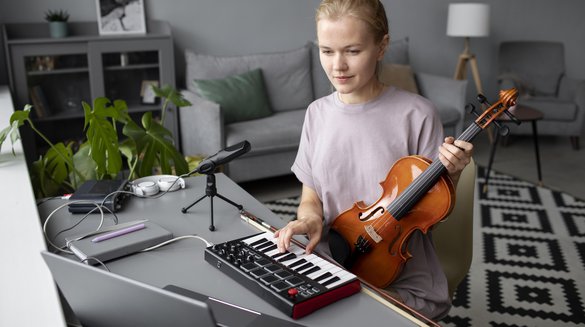
For a long time, music creation felt like a closed world. You needed years of practice, expensive gear, and a deep understanding of theory just to get started. That barrier stopped many creators before they even tried. Today, that’s changing rapidly thanks to AI-based music tools that make sound creation accessible to almost anyone.
This shift isn’t about replacing musicians. It’s about expanding who gets to participate in music creation.
When Ideas Move Faster Than Skills
Many creators already know what they want their content to feel like. They can describe a mood, a tempo, or an emotional tone clearly — but they don’t know how to turn that idea into sound. Traditional music software assumes technical knowledge, which creates friction early in the process.
Through music creation with artificial intelligence, creators can bypass that friction. Instead of learning chords or arranging instruments, they focus on intent. The technology translates that intent into something usable, often within minutes.
This change has been especially impactful for people working in video, education, and digital storytelling, where music supports the message rather than being the centerpiece.
Creativity Without Fear of Mistakes
One underrated benefit of AI-driven music tools is psychological. When time and money are no longer barriers, creators feel freer to experiment. There’s no pressure to “get it right” on the first attempt.
Creators can:
- Test multiple moods for the same project
- Compare different pacing options
- Discard ideas without sunk costs
This experimentation often leads to better results, not worse ones. By lowering the cost of failure, creativity increases.
Where AI Fits Naturally in the Workflow
Most creators don’t use AI as a final step. Instead, automated music creation software is often used early in the creative process. Music influences how a video is edited, how a story flows, or how long a scene lasts. That same shift is starting to show up on the video end as well, where modern video editor software can act on plain-language direction from the creator rather than requiring them to work through a manual timeline.
Common use cases include:
- Background music for explainer videos
- Podcast intros and transitions
- Educational content requiring neutral sound
- Early drafts for creative projects
In these scenarios, AI doesn’t replace human judgement. It provides momentum.
The Shift From Technical Skill to Creative Direction
With AI-generated music platforms, the creator’s role changes. Instead of executing every detail, they act as a director. They decide what the music should communicate, not how each note is played.
This is similar to how photography evolved. Modern cameras didn’t remove artistry — they removed barriers. The same thing is happening with sound.
Music creation becomes about taste, intention, and storytelling rather than technical mastery alone.
Addressing Concerns Around Authenticity
Some critics worry that AI-generated music lacks authenticity. In practice, authenticity comes from how music is used, not how it’s generated. Music created through artificial intelligence for music production still reflects human decisions — mood, pacing, context, and purpose all come from the creator.
When used thoughtfully, AI becomes a tool, not a crutch.
A New Creative Entry Point
For many people, AI is their first step into music creation. Some will stop at basic use. Others will go deeper, learning production techniques and refining their sound. In both cases, music creation with artificial intelligence acts as a bridge rather than a dead end.
The result is more creators, more experimentation, and more diverse soundscapes.
Final Reflection
AI hasn’t changed what music is. It’s changed who gets to create it. For creators without formal training, AI-based music tools aren’t shortcuts — they’re invitations to participate.

Safeguard Your Child Against Online Threat
Register Now Cancel Any Time
Available
on
Cancel Any Time
Available
on