
Published on Oct 01, 2026

Prasanta R
Leveraging AI-led Invoice Processing Software
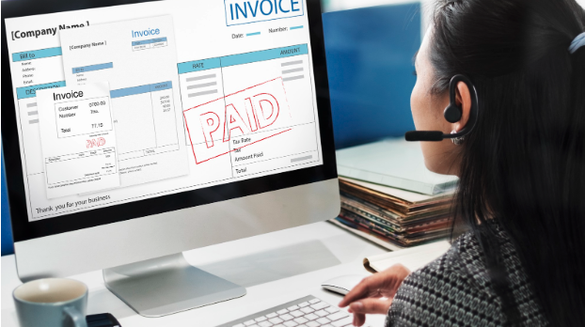
Large enterprises often struggle to maintain accuracy and speed when processing thousands of invoices every month. Manual handling limits productivity: an employee can process only a few invoices per hour, each costing several dollars to manage. As volumes scale, even minor delays can strain vendor relationships, slow down financial workflows, and create bottlenecks across the accounting function.
AI addresses these challenges by automating data extraction, validation, and approvals through the use of OCR, machine learning, and intelligent workflows. It can accurately interpret unstructured invoices, standardize information, and significantly accelerate processing.
This article examines how AI-driven invoice processing is revolutionizing enterprise accounting operations and enhancing financial efficiency.
The Operational Burden of Manual Invoice Processing
Huge accounting teams often struggle with speed and accuracy when managing high-volume invoices. Manual processes and slow payment cycles can create errors and result in missed early-payment advantages. Over two-thirds of companies report mistakes in their invoices, with a significant portion requiring rework.
Compliance and approval delays add more pressure. Many AP teams encounter invoices that don’t meet policy standards, requiring additional checks and vendor follow-ups. This pulls finance staff away from profits.
For companies with multiple locations or supplier networks, complexity increases further. Inconsistent invoice formats and scattered approval chains make legacy systems inefficient and difficult to scale.
Benefits of AI-led Invoice Processing Software for Enterprise Workflows
AI-led invoice processing software leverages intelligent automation to handle diverse invoice formats and adhere to company regulations. The software uses a tool called optical character recognition. Many finance leaders find that purchasing software with AI capabilities reduces invoice processing time by up to 80% compared to manual methods. This tool reads scanned or digital invoices and turns them into text that computers can understand. It identifies essential details, including vendor name, invoice number, listed items, amounts, and dates. Here are the quantifiable benefits of using AI-led invoice processing software:
1. Significant Cost Reduction
AI-powered invoice tools can cut processing costs by up to 67%. Modern systems also achieve 98–99% OCR and field-extraction accuracy after training, resulting in measurable savings and reduced risk for businesses handling large volumes of invoices.
2. Higher Processing Capacity
Automation significantly increases the number of invoices a single AP employee can manage. With complete invoice automation, one person can process 23,333 invoices per year, compared to only 6,082 manually, nearly 4× the productivity without additional hiring.
3. Faster Turnaround Times
Companies can reduce invoice processing times by up to 80%. This speeds up the entire procure-to-pay cycle, improves reliability, and enables businesses to capture early-pay discounts and make more accurate cash-flow forecasts. For organizations extending these gains beyond invoice processing, strategic procurement automation can coordinate requisitions, approvals, ordering, and payments across the full purchasing cycle.
4. Better Fraud Detection & Accuracy
AI-led invoice software detects unusual patterns such as duplicates, inflated amounts, or unapproved vendors. It processes documents 90% faster and captures income data with 93% accuracy, strengthening financial controls.
5. Improved Compliance & Visibility
Automated systems track every step from invoice receipt to final payment. They send reminders for pending approvals, flag delays, maintain real-time audit trails, and help ensure compliance with legal and regulatory requirements.
Implementation Requirements for AI-Powered Invoice Systems
Finance teams should focus on platforms that support advanced technologies, such as optical character recognition (OCR), natural language processing (NLP), and machine learning, in the analysis of artificial intelligence-based invoice processing solutions. These features ensure proper data retrieval, standardized categorization, and seamless integration with current ERP systems, which are fundamental requirements for maintaining operational continuity. For example, tools like a AI finance platform used by growing companies can connect invoice data with real-time cash-flow views.
The software should also be able to scale easily with the increase in invoice volumes to avoid bottlenecks in the future. However, successful change adoption requires a structured approach to change management. The teams should be trained on new working processes to ensure that AI can handle routine tasks, whereas employees focus on exceptions, contacting the vendor, and making strategic financial decisions.
Security and compliance should be regarded as non-negotiable. Top sites utilize strong encryption and adhere to compliance frameworks such as SOC 2 and GDPR, as well as data-residency requirements in specific regions. It’s also essential to ensure that the solution meets the organization’s internal security requirements across all jurisdictions in which it operates.
Parting Thoughts
AI-powered invoice processing delivers faster cycles, lower costs, and stronger fraud control, benefits that are already giving early adopters a competitive edge. Companies that wait risk widening operational gaps as AI capabilities advance. The question for finance leaders is no longer if AI should be implemented, but how quickly they can adopt a solution that aligns with their operational needs and scale.

Safeguard Your Child Against Online Threat
Register Now Cancel Any Time
Available
on
Cancel Any Time
Available
on