

Published on Jul 24, 2026

Super Admin
Top Hardware Product Development Companies in Europe
The European hardware product development landscape has transformed into a dynamic ecosystem of specialized firms delivering cutting-edge engineering solutions across embedded systems, IoT, PCB design, and full-cycle product development. The market reached $135.43 billion in 2025 and is projected to grow to $164.56 billion by 2029, reflecting a 5% compound annual growth rate. This growth is driven by accelerating digital transformation, the proliferation of IoT devices, and increasing demand for integrated hardware-software solutions.
Market Overview and Industry Trends
Europe's hardware development sector is experiencing a significant transformation. Poland has emerged as a major hub for hardware engineering, supported by strong technical talent, cost-effective solutions, and a strategic location. Germany maintains its position as Europe's largest IT market, accounting for approximately a quarter of the European market value. The industry is witnessing accelerated development cycles, with innovative companies reducing traditional product development timelines from 30 months to just 4 months through agile methodologies and advanced manufacturing technologies.
Edge AI hardware is experiencing robust growth, with the European market estimated at $14.8 billion in 2025 and projected to reach $97.5 billion by 2033, representing a CAGR of 27.5%. Custom AI chips and specialized silicon are revolutionizing hardware capabilities, with Neural Processing Units, Tensor Processing Units, and AI accelerators enabling faster processing, lower latency, and reduced energy consumption for industrial AI workloads.
Leading European Hardware Development Companies
Yalantis
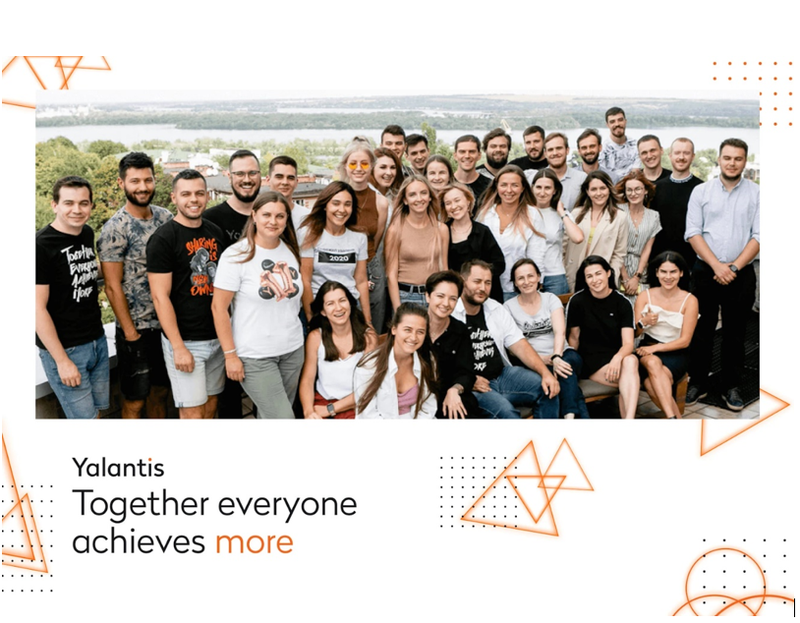
Yalantis is an ISO 9001 and ISO/IEC 27001 certified software engineering and IT consulting company founded in 2008. With 14+ years of experience and over 500 qualified experts, Yalantis has established itself as a leading engineering partner specializing in complex digital product development with deep expertise in IoT. The company operates development centers across Europe, including Warsaw (Poland), Dnipro, Kyiv, and Lviv (Ukraine), as well as Larnaca (Cyprus).
Yalantis offers comprehensive hardware development services as part of its end-to-end IoT solutions. The company's hardware capabilities include electronic system design, PCB design and prototyping, firmware development, testing and certification support, manufacturing support, and IoT system integration. This integrated approach eliminates communication barriers between hardware and software teams, reducing development cycles while maintaining reliability.
The company follows a structured six-phase hardware development process: discovery and tech analysis, system architecture and schematics, PCB design and prototyping, firmware development, testing and certification, and manufacturing handoff with ongoing support. This comprehensive methodology ensures projects move smoothly from concept to production.
Yalantis serves multiple industries including fintech, healthcare, logistics, manufacturing, smart home and appliances, energy and resources, and real estate. The company's prestigious client portfolio includes Toyota Tsusho, Bosch, Zillow, KPMG, Google X, RAKwireless, Orbis Systems, Miko, and Healthfully. Client testimonials highlight 96% customer satisfaction and 15+ partners collaborating with Yalantis for over 7 years.
The company's technology stack spans backend solutions (Java, .NET, Node.js, Python, Rust, Go), frontend frameworks (React, Angular, Vue.js), mobile development (Swift, Kotlin, Flutter, React Native), and cloud platforms (AWS, Google Cloud, Azure). Yalantis specializes in Cloud & DevOps, Business Intelligence, Analytics, Big Data, Machine Learning and AI, IoT, Data Science, Cybersecurity, Performance Engineering, and UI/UX design.
In September 2022, Yalantis opened its R&D office in Warsaw, Poland, providing workspace for dozens of professionals and talented IT specialists. The Warsaw office has hosted multiple technical events, including IoT Edition meetups featuring hardware and software development topics, strengthening Yalantis's presence in the European tech community.
Yalantis distinguishes itself through integrated expertise combining software and hardware development capabilities, transparent processes with regular demos and detailed progress reports, flexible engagement models including team augmentation and full project ownership, and experience navigating regulatory requirements in markets requiring CE/FCC and various compliance standards.
IntechHouse (Poland)
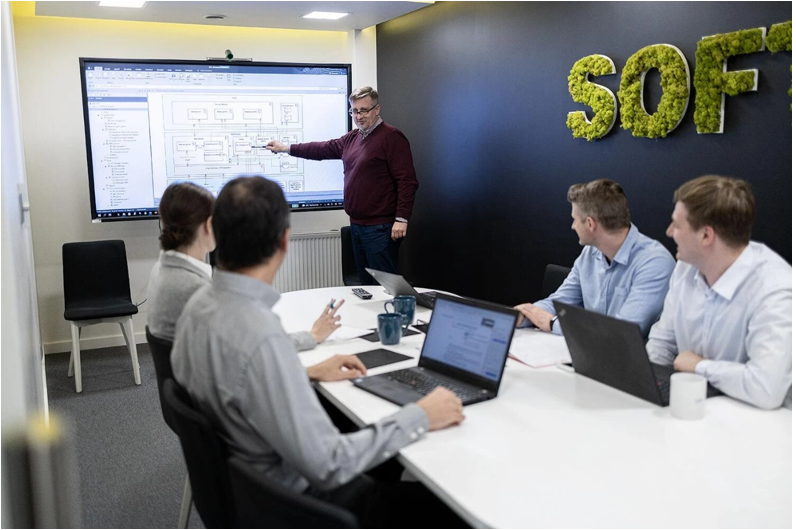
Based in Bydgoszcz, Poland, IntechHouse stands as one of Europe's premier hardware development companies with over 20 years of experience. The company operates as the international division of SofBlue SA and holds certification as an R&D center. IntechHouse specializes in IoT systems, embedded development, PCB design, FPGA programming, and full-cycle prototyping.
With over 100 engineers and a 91.2% employee retention rate, the company serves diverse sectors including oil and gas, aerospace, healthcare, financial services, telecommunications, and logistics. Their comprehensive services span hardware design, EMC and environmental testing, data analytics, and AI and process automation. IntechHouse maintains a strong European presence with clients in France, Germany, Switzerland, the Netherlands, UK, and USA. Ultimately, for any physical hardware to function seamlessly within modern tech ecosystems, partnering with teams that excel in rigorous embedded software development is just as crucial as the physical manufacturing itself.
Prevas AB (Sweden)
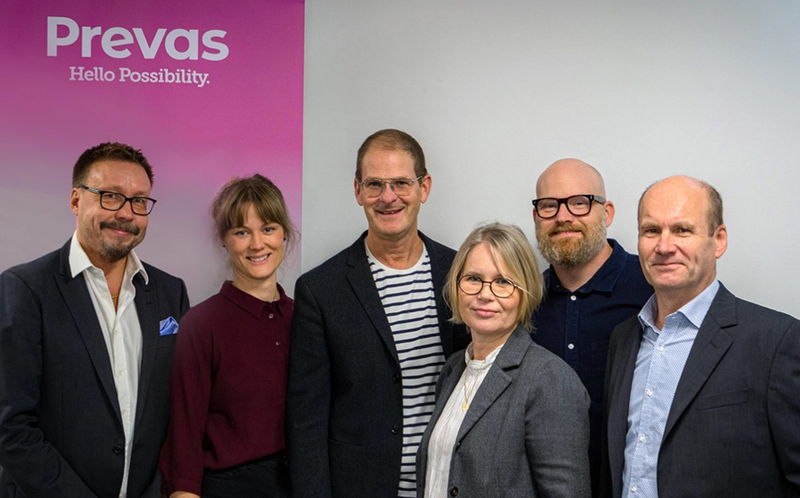
Headquartered in Västerås, Sweden, Prevas AB is a publicly traded company founded in 1985 with over 1,100 employees across Scandinavia and India. The company provides hardware-focused R&D services across embedded systems, automation, and IoT for sectors including life science, automotive, and defense. Prevas holds ISO 9001 and ISO 13485 certifications, demonstrating compliance with international quality standards.
Their service portfolio includes PCB layout, FPGA design, enclosure design, and certification support. Prevas has won the Swedish Embedded Award in the Enterprise category four times for innovations including communications systems for rescue operations, liquid analyzers, wireless breathalyzers, and wireless CPR training manikins. The company generated approximately $143.7 million in revenue and employs about 902 people.
Sigma Connectivity (Sweden)
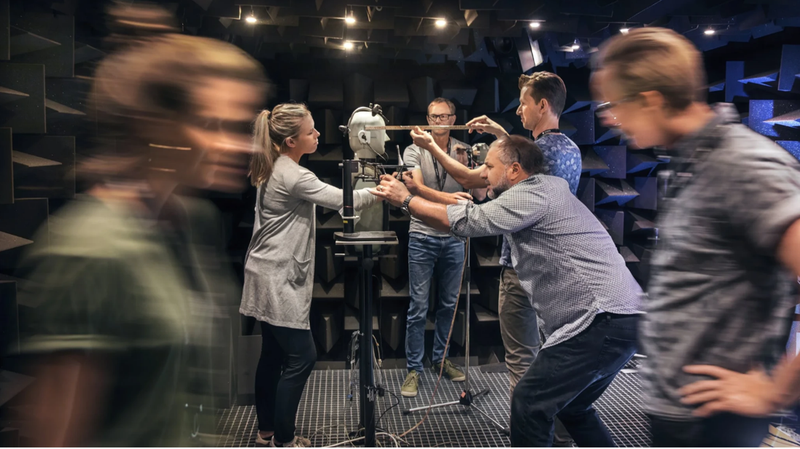
Based in Lund, Sweden, Sigma Connectivity operates as a global design house and engineering services group with over 700 experts, 300+ satisfied clients, and 2,000+ successful projects. The company delivers telecom-grade hardware and connected devices across multiple industries including Consumer Products, Smart Homes, Automotive, Industry 4.0, MedTech, and CleanTech.
Sigma Connectivity offers comprehensive services from design to production, with state-of-the-art labs providing advanced design, test, and verification capabilities. The company maintains offices in Sweden (Lund, Stockholm, Linköping), Denmark, Germany, Poland, and North America. Their expertise spans product realization, engineering services, and business transformation through connected device solutions.
Lanars (Norway)

Founded in 2016 with headquarters in Oslo, Norway, Lanars operates additional offices in Edinburgh, Vilnius, Ukraine, and Georgia. The company offers full-cycle engineering services for embedded systems, IoT devices, and industrial electronics. Lanars distinguishes itself through in-house lab capabilities, enabling fast iteration and thorough validation of electronic systems.
Their service offerings include custom electronics development, embedded systems programming, FPGA design, PCB design and prototyping, certification assistance, and software integration. The company emphasizes a painless innovations approach, combining hardware and software expertise within a single team to help businesses implement transformational upgrades.
Würth Elektronik (Germany)
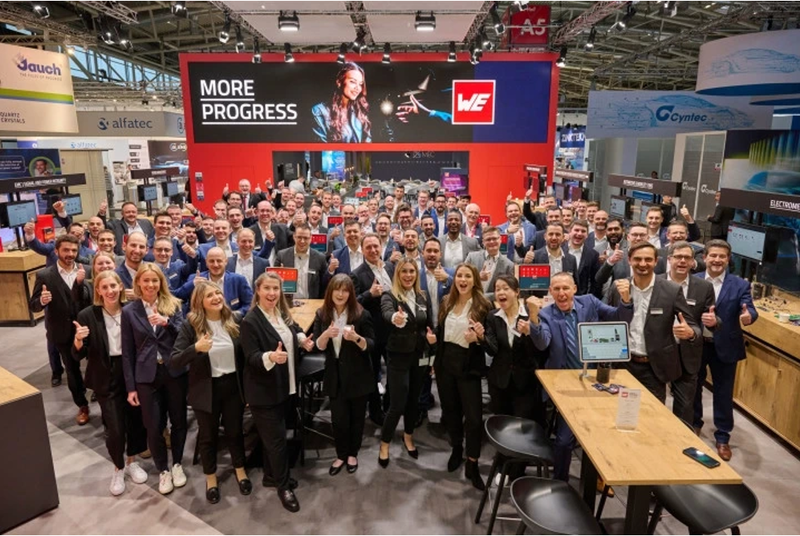
Based in Niedernhall, Germany, Würth Elektronik is one of the world's leading manufacturers of electronic and electromechanical components. The company operates 14 manufacturing facilities worldwide and serves as one of Europe's leading PCB suppliers. Würth Elektronik Circuit Board Technology has provided PCB expertise since 1971, offering a comprehensive portfolio from basic PCBs to complex HDI Microvia PCBs, sophisticated rigid-flex boards, and component embedding technologies.
The Würth Elektronik Group employs approximately 7,500 people worldwide and generated €1.02 billion in global sales in 2024. Their product range extends to electronic components, EMC components, power inductors, transformers, capacitors, power modules, LEDs, sensors, connectors, and wireless data transmission solutions.
Lemberg Solutions
Headquartered in Ukraine and Poland, Lemberg Solutions is an engineering company founded in 2009 that specializes in firmware development, embedded software, and IoT product engineering. The company holds ISO 9001 and ISO 27001 certifications, demonstrating its commitment to quality management and information security. Lemberg Solutions serves industries including automotive, healthcare, industrial IoT, energy, agritech, and manufacturing, supporting organizations in developing connected products and hardware-enabled solutions.
Their service portfolio includes low-level firmware development, real-time embedded systems, sensor and device integration, communication protocol implementation, and full-stack IoT engineering. Lemberg Solutions also integrates embedded software with cloud platforms and mobile applications, providing end-to-end connectivity for modern IoT ecosystems. By combining embedded development and programming expertise with cloud, AI, and digital engineering, the company delivers scalable embedded architectures and production-ready IoT solutions, helping clients take connected devices from prototype through large-scale deployment while managing firmware, connectivity, cloud infrastructure, and application layers through a single engineering partner.
Selection Criteria for Hardware Development Partners
When selecting a hardware development partner in Europe, several factors warrant consideration. Technical expertise spanning PCB design, embedded systems, FPGA development, firmware programming, and certification support is essential. Industry experience in relevant sectors ensures understanding of specific requirements, particularly in regulated industries like medical devices, automotive, or aerospace.
Product portfolio management for product leaders and product portfolio management for product leaders and development methodology matter significantly.. Agile approaches can reduce time-to-market dramatically, with some companies demonstrating 87.5% reduction in development cycles. Geographic presence offers advantages including proximity to clients, understanding of EU regulations, and cultural alignment.
For IoT and connected products, seamless integration of hardware, firmware, software, and cloud services is critical. Companies offering full-stack development eliminate coordination challenges between separate vendors. Certifications like ISO 9001, ISO/IEC 27001, and ISO 13485 indicate commitment to quality management and information security.
Early-stage teams also accelerate validation through AI prototyping services, ensuring user flows and interface logic are tested before costly hardware iterations.
Conclusion
Europe's hardware product development sector encompasses diverse companies offering specialized expertise across the product development lifecycle. From established players to innovative specialists, the European ecosystem provides comprehensive solutions for companies seeking hardware development partners. The sector continues evolving toward faster development cycles, greater integration of AI and edge computing platforms, and increased focus on sustainable, compliant solutions. Companies successfully navigating these trends while maintaining quality, flexibility, and regulatory compliance will be best positioned to serve the growing demand for hardware product development services in Europe.

Safeguard Your Child Against Online Threat
Register Now Cancel Any Time
Available
on
Cancel Any Time
Available
on