

Published on Aug 04, 2026

Prasanta R
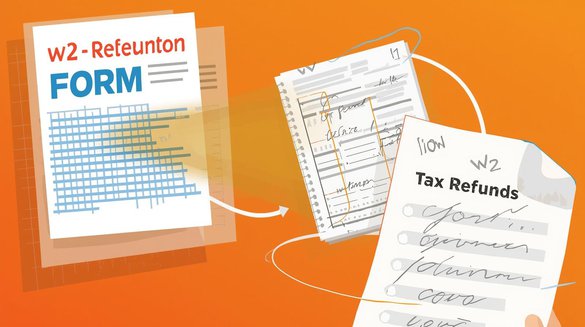
W-2 Form and Tax Refunds: How It Impacts Your Return
The W-2 form is a critical document for employees when it comes to filing taxes and understanding your refund. It provides a summary of your income, tax withholdings, and other vital details that directly impact the size of your tax refund or the amount you owe at the end of the year. Understanding how the W-2 form connects to your tax refund is key to ensuring your tax filing goes smoothly and that you get the correct amount back.
How Your W-2 Connects to Your Tax Refund
The W-2 form is issued by your employer and summarizes your total earnings and tax withholdings for the year. It’s a crucial document in determining whether you owe additional taxes or if you’re due a refund. Many people work with an accounting virtual assistant to review their W-2 carefully, catch any errors early, and better understand how their withholdings affect their final tax outcome.
When you file your tax return, the IRS compares your total earnings (as reported on your W-2) to the amount of tax withheld throughout the year (also reported on the W-2). If more was withheld than you owe in taxes, you will receive a refund. If less was withheld, you may owe additional taxes.
Which W-2 Boxes Impact Your Return the Most
There are several boxes on the W-2 form, and each one can influence the size of your refund. Here are the key boxes to focus on when reviewing your W-2:
- Box 1 (Wages, tips, and other compensation): This box shows your total taxable income, which is the amount the IRS uses to calculate how much tax you owe.
- Box 2 (Federal income tax withheld): This is the amount of federal income tax that has already been withheld from your paychecks throughout the year. This amount is subtracted from your total tax liability when you file your return.
- Box 17 (State income tax withheld): This box shows the amount of state income tax that was withheld, which may impact your state tax return and your state refund (if applicable).
- Box 12 (Other compensation and deductions): This box lists various other taxable items, such as retirement contributions or health insurance premiums that were deducted pre-tax.
These boxes directly affect the amount of taxes you owe or the amount of your refund.
How Federal Withholding Affects Refund Size (Why “Bigger” Isn’t Always Better)
It’s important to understand that having a larger federal withholding amount reported on your W-2 form does not always result in a larger refund. If you have too much tax withheld throughout the year, you may end up receiving a large refund, but this is essentially the government holding onto your money until tax time.
On the other hand, if too little is withheld, you may owe money when filing your taxes. The key is finding the right balance, so that your withholding is accurate and aligned with what you actually owe.
How Benefits on Your W-2 Can Change Your Taxable Income
Your W-2 form also reports certain benefits that can affect your taxable income. For example:
- Retirement Contributions: If you contributed to a 401(k) or other employer-sponsored retirement account, this amount is generally deducted from your taxable income.
- Health Insurance: If you participate in an employer-sponsored health insurance plan, the amount you paid for premiums may also be excluded from your taxable income.
- Flexible Spending Accounts (FSAs) and Health Savings Accounts (HSAs): Contributions to these accounts are also deducted from your taxable income.
These benefits can reduce the amount of tax you owe and increase your refund. It’s important to carefully check these items on your W-2 to ensure they have been correctly reported.
How Multiple W-2s Affect Refunds
If you worked multiple jobs throughout the year or had side gigs, it’s essential to ensure that all of your W-2 forms from each employer are accurately reported when you file your tax return. Multiple W-2s can affect the overall amount of tax withheld and may result in either a larger refund or a tax bill at the end of the year.
Common W-2 Issues That Delay Refunds (And How to Avoid Them)
Several common mistakes on the W-2 form can delay your refund, such as:
- Incorrect SSN or Name: Ensure that your Social Security number and name are correct. If they are wrong, it could delay your refund or prevent your taxes from being processed correctly.
- Inaccurate Tax Withholding: If your W-2 shows incorrect federal or state withholding, it can cause discrepancies when you file your return. Check that the amounts withheld are correct and match your paystubs.
- Missing W-2: Sometimes, employers forget to send the W-2 form on time. If you haven’t received your W-2, contact your employer as soon as possible.
Refund Red Flags: When Your W-2 Doesn’t Match Your Paystubs
If your W-2 doesn’t match the amounts reported on your paystubs, this is a red flag. For example:
- Wages don’t match: If the total wages reported on your W-2 don’t align with the amount you were paid, there may be an issue with the reporting.
- Withholding doesn’t match: The amount of tax withheld on your W-2 should reflect what’s reported on your paystubs throughout the year.
If you notice discrepancies, reach out to your HR department or payroll team immediately to get a corrected W-2.
What to Do If You Haven’t Received Your W-2
By law, employers must send out W-2 forms by January 31st. If you haven’t received yours by mid-February, contact your employer to inquire about its status. If your employer is unreachable or unresponsive, you can contact the IRS to initiate a follow-up.
If your W-2 is still missing after trying to reach your employer, the IRS may ask you to fill out Form 4852 (a substitute for the W-2 form) and submit it with your tax return.
H2: What to Do If Your W-2 Is Wrong
If you find an error on your W-2 form, don’t panic. Employers can issue corrected W-2s—called W-2c forms—to fix mistakes. Common errors that can be corrected on a W-2 include:
- Incorrect wages or tips: If your reported income is wrong, your employer can issue a corrected W-2.
- Wrong withholding amounts: If federal or state taxes were withheld incorrectly, this can also be adjusted with a W-2c.
Once you receive your corrected form, file your taxes with the updated information.
Quick Checklist Before You File
Before filing your taxes, ensure that your W-2 form is accurate and complete. Here’s a quick checklist:
- Verify personal information: Check that your name, SSN, and address are correct.
- Check employer information: Make sure the employer’s name, address, and EIN are accurate.
- Review wages and withholding: Ensure your total income and tax withholding are correct.
By completing this checklist, you can ensure that your W-2 form is in good shape before filing your taxes.
FAQ
Why does the W-2 form impact my tax refund?
The W-2 form reports your total income and how much federal tax was withheld throughout the year. This information helps the IRS determine if you owe additional taxes or if you're due for a refund.
Can I still get a tax refund if my W-2 form has errors?
If there are errors on your W-2, it could delay your refund. You need to contact your employer to request a corrected W-2 (Form W-2c) before you file your taxes.
How do I know if the withholding on my W-2 is accurate?
Check your paystubs to compare the federal tax withheld throughout the year with the amount on your W-2. If the numbers don’t match, ask your employer to correct it.

Safeguard Your Child Against Online Threat
Register Now Cancel Any Time
Available
on
Cancel Any Time
Available
on