
Published on Sep 14, 2026

Super Admin
Why AI Music Videos Could Become the Most Exciting Creative Upgrade of 2026
There was a time when finishing a song actually felt like finishing something. You wrote the lyrics, shaped the melody, cleaned up the mix, exported the final version, and that was the end of the creative road. But that version of music culture is disappearing fast. Today, a song is rarely just a piece of audio. It is a launch moment, a social asset, a visual identity, a mood, and often the beginning of a much bigger creative package.
People do not only discover music by sitting down and pressing play anymore. They find it while scrolling. They hear it inside edits, short clips, teasers, reels, and visually driven content that creates the first emotional impression before the full track even gets a chance to speak. That means a modern release needs more than a strong hook or a polished mix. It needs a world around it. It needs presence. It needs something that feels cinematic enough to stop attention and memorable enough to stay with the viewer after the clip ends.
That is exactly why AI music video creation is starting to feel like such a big deal. It is not just solving a technical problem. It is solving a creative one.
The Hard Part Was Never the Imagination
Most artists do not struggle because they do not know what their music should feel like visually. In fact, it is usually the opposite. The visuals are already there in their heads. They can hear a verse and immediately imagine a midnight drive, a glowing city, a dream sequence, a broken romance, a surreal fantasy, or some sharp-cut performance montage that rises with the chorus. The imagination is not missing. What has always been missing is a fast, natural, affordable way to turn that imagination into a real piece of visual storytelling.
That is where the old workflow starts to fall apart. Making a song is one creative mode. Making a music video is often a completely different mode. Suddenly the artist is expected to think like a director, editor, planner, visual stylist, and post-production coordinator all at once. It becomes less about feeling and more about logistics. Instead of staying close to the emotion of the music, the creator gets dragged into shot lists, pacing issues, continuity problems, revisions, and the endless puzzle of making image and sound feel like they actually belong together.
This is why so many strong songs still arrive with visuals that feel oddly smaller than the music itself. The artist had the vision. The workflow simply got in the way.
AI Is Changing the Part of the Process That Needed Help Most
The first wave of AI music tools made headlines because they helped with song creation. That made sense. Faster ideation, easier composition, more accessible experimentation—those were big wins. But the more interesting creative shift may be happening one step later. The bigger opportunity is not just generating music more quickly. It is building a bridge from music to visual expression without breaking the original momentum of the idea.
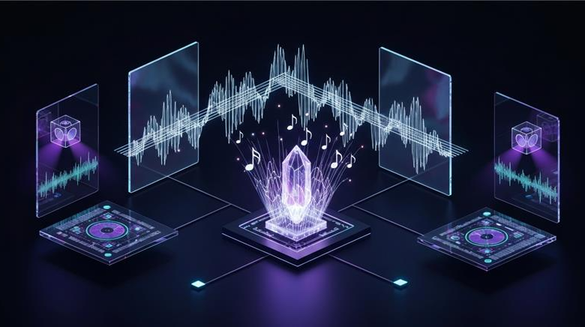
That is why SeeMusic AI feels especially relevant right now. Instead of treating video creation like a separate chore that only begins after the music is finished, it starts with the song itself. A track gets uploaded or linked, and the system begins by understanding what is already there: the structure, the tempo, the mood, the lyrical timing, the emotional rise and fall. From there, the creative process starts expanding rather than splitting apart.
That matters because a song already contains a visual logic. It already has motion hiding inside it. A chorus wants scale. A softer line wants intimacy. A drop wants impact. A transition wants a change in scene, color, or emotional temperature. If a system can recognize those cues and help shape visuals around them, then the process stops feeling like “audio first, visuals later” and starts feeling like one continuous act of creation.
A Better Workflow Starts With Conversation, Not Complexity
One of the most refreshing things about this kind of tool is that it feels closer to talking through a vision than wrestling with software. That may sound like a small difference, but creatively it is huge.
Most people do not think in timelines and keyframes when they first imagine a music video. They think in moods. They think in flashes. They think, “This part should feel lonely,” or “This chorus needs to open up,” or “I want this to look like a futuristic love story with a cinematic edge.” That is the natural language of creativity. It is intuitive, emotional, and fast. The problem is that traditional production pipelines force people to translate that language into a mountain of technical tasks before anything meaningful appears on screen.
A conversation-driven process keeps the creator inside the part of the work that actually feels alive. Instead of spending hours figuring out how to mechanically build an idea, the creator can stay focused on what the idea should become. Once that happens, the energy changes. The workflow feels less like operating tools and more like directing a world into existence.
Why Creative Planning Makes Such a Big Difference
A lot of people still think the magic of AI is just generation. Press a button, get an output. But anyone who has spent time around visual content knows that random output is not the same thing as a real piece of work. A good music video needs coherence. It needs a recognizable identity. It needs scenes that feel like they belong to the same emotional universe.
This is why planning matters so much. Before the final video is assembled, the strongest creative workflows allow the vision to take shape properly. Characters, settings, visual style, narrative arc, and reference imagery all help lock in direction before the first sequence is fully realized. That is a major advantage, because it prevents one of the most common problems in AI-driven visuals: inconsistency.
Creators do not just want “cool shots.” They want continuity. They want the audience to feel like they have entered a world and stayed inside it. When the style is clear from the beginning, the final result feels less like a collection of generated moments and more like a unified visual experience that actually belongs to the song.
The Best Music Videos Know How to Move With the Track
This is where things get really interesting. A music video is not just a series of pretty images. It is timing. It is pressure and release. It is knowing when to accelerate, when to pause, and when to let the visuals breathe with the sound instead of sitting awkwardly beside it.
Everyone can feel the difference, even if they cannot explain it technically. When a beat drops and the video does nothing, the moment falls flat. When a chorus explodes but the visuals stay emotionally small, the energy gets lost. When the transitions ignore the structure of the song, the whole thing starts to feel disconnected, no matter how polished the individual shots may be.
That is exactly why an AI Music Video Generator feels so promising when it is built around the internal logic of the music itself. Instead of forcing timing into place after everything else is done, it can make rhythm, lyrical phrasing, and section changes part of the visual plan from the start. The result is not just a video with music attached. It is something much closer to a unified piece of expression.
Why This Matters More in 2026 Than It Did Before
The timing of this shift is not random. Music now lives inside a visual-first internet. Songs do not simply get released; they get introduced, clipped, packaged, previewed, and circulated through content systems that reward immediate emotional impact. In that environment, audio quality alone is not enough to carry attention. A track needs a visual entry point. It needs a feeling people can recognize quickly.
That does not mean every artist suddenly needs a blockbuster budget or a huge production team. In fact, that is exactly why smarter AI workflows are so appealing. They offer a way to make music feel bigger without forcing creators into a long, expensive, and creatively exhausting production cycle. They let artists think more ambitiously without automatically making the process heavier.
For solo creators, indie musicians, small labels, and fast-moving digital teams, that can be a major advantage. It means the gap between “I know what this song should look like” and “I have something real to release” becomes dramatically smaller.
Human Taste Still Decides What Matters
There is always some nervousness around AI and originality, but the best creative tools do not erase taste. They make taste matter more.
Once the repetitive technical burden becomes lighter, the most important thing is no longer who can click through the most complex workflow. It is who can make the strongest creative choices. Should the video feel intimate or epic? Dark or playful? Dreamlike or sharp? Character-led or abstract? Rich with narrative, or driven mostly by mood and motion? Those decisions still belong to the creator, and they still determine whether the final piece feels generic or genuinely alive.
That is why AI works best here as an amplifier, not a replacement. It gives creators more room to focus on direction, identity, and emotional truth. Instead of burying the artist under process, it lets the artist spend more time doing the part only they can really do: deciding what the work should feel like.
The Release Is Becoming Bigger Than the Track
Maybe the most important shift here is that a song is no longer being treated as a standalone file. It is becoming the center of a larger experience. The release includes sound, imagery, pacing, mood, character, and presentation. It includes the way the music meets the audience, not just the way it sounds once it gets there.
That is why AI music video creation feels like more than a passing trend. It solves a real problem in modern creative work. It closes the gap between instinct and execution. It helps protect the emotional force of an idea while making it easier to present that idea in a way that feels complete.
For artists who have always had cinematic instincts but lacked the time or technical capacity to act on them fully, that is a meaningful shift. It gives them a better chance to release work that feels as ambitious as it sounds.
Final Thoughts
The next generation of music content will not be defined only by how quickly a song can be made. It will be defined by how completely that song can arrive in the world. Audio still matters. Great songwriting still matters. But more and more, so does the ability to turn music into a vivid, visual, emotionally coherent experience.
That is why AI music video creation is starting to feel like one of the most exciting upgrades in the modern creative stack, making it easier to create videos with AI while preserving creative intent. It does not just make the process faster. It makes the path from idea to release feel more natural, more expressive, and much closer to the way artists actually imagine their work in the first place.
And that may be the biggest advantage of all.

Safeguard Your Child Against Online Threat
Register Now Cancel Any Time
Available
on
Cancel Any Time
Available
on