


Published on Dec 18, 2025

Prasanta R
Why Bare Metal Servers Are a Smart Choice for HIPAA, PCI, and GDPR
If you’ve ever sat in a meeting where infrastructure decisions were made, you already know that predictable cost and speed are rated highly, but in the end, it all comes down to compliance. In a regulated environment, the fewer audit headaches you can have, the better.
The benefits of using bare metal servers mainly come in the form of reduced uncertainty. It’s not so much about technical preference as it is about giving you clearer boundaries and a setup that is easier to explain to an auditor.
Obviously, you can still misconfigure bare metal or give too many people admin access. It’s not a magic compliance button, but what it does well is remove a whole category of ambiguity.
All About the Evidence
HIPAA, PCI DSS, and GDPR all expect that you show proof of control in the form of access logs, change history, diagrams of what touches what, and records of how you respond when something goes wrong.
In HHS’s 2022 Report to Congress, OCR reports 626 breaches affecting 500+ individuals, impacting about 41.7 million people, with hacking and IT incidents representing the largest category by count.
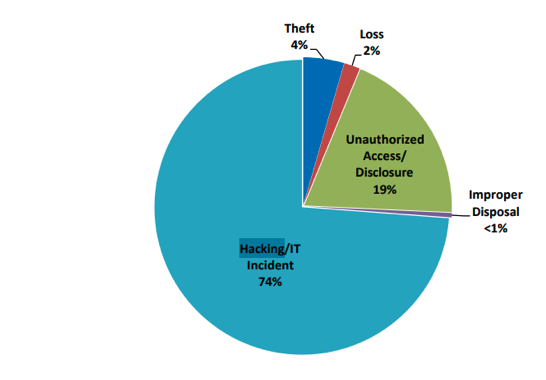
Looking at those numbers, it’s easy to see why you need to make your environment easier to secure and monitor, but also easier to explain.
Bare metal helps because it simplifies the story. Dedicated hardware gives you a cleaner boundary for access control and incident response. Those are areas auditors tend to care about because they translate directly to risk.
Why Shared Infrastructure Complicates Things
Multi-tenant platforms can be secure, but they introduce “shared fate” problems.
Even if your application is perfect, you may still rely on a provider’s hypervisor, host patching schedule, logging defaults, and internal access policies. That can be fine until your audit scope expands and you’re stuck collecting evidence from five places instead of one.
With bare metal, your compliance boundary becomes easier to draw because you can point to a dedicated machine and logs, and talk about the exact controls you configured.
Attackers Don’t Care About Your Vendor Diagram
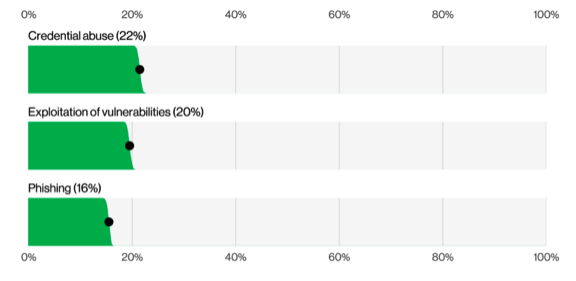
Most organizations get breached because attackers get in with stolen credentials, phishing, exposed remote access, unpatched systems, or misconfigurations. Bare metal doesn’t stop these, but it does give you clearer control over the blast radius and the detective controls that tell you something is wrong.
Verizon’s 2025 DBIR analyzed tens of thousands of incidents and confirmed breaches, and it’s packed with charts that make this point clear.
HIPAA: Make Risk Analysis and Safeguards Easier to Prove
If you handle ePHI, start with a real risk analysis that maps to your systems, users, vendors, and data flows. HHS is direct about risk analysis being a foundation step under the Security Rule.
With bare metal, you can define exactly how disks are encrypted, how admin access works, which ports are open, and how logs are collected. Then you document this once and maintain it, instead of chasing changing defaults.
PCI: Smaller, Tighter, and Easier to Segment
PCI work gets ugly when card data environments sprawl, but bare metal helps you create a clear “cardholder data zone” with limited admin access and locked-down management interfaces. It’s much easier to defend an environment where only a few systems can even touch payment flows.
A mindset that works well with bare metal is “default deny.” If something doesn’t need to talk to the payment zone, it shouldn’t be able to. That single idea reduces scope and, by extension, reduces risk.
GDPR: Control, Data Location, and Fast Response
GDPR expects you to be able to justify what you collect, why you collect it, how long you keep it, and how you protect it.
If you need EU-based processing, you can keep the physical resources in-region and design the environment so personal data doesn’t get copied into random systems “for convenience.”
Bare metal also supports privacy-by-design in a practical way, by letting you build stricter defaults into the platform. Shorter log retention for sensitive fields, stronger encryption standards, tighter access roles, and cleaner deletion procedures are easier to enforce when you control the full stack.
If you ever need to investigate an incident, having direct access to host-level logs and system telemetry can speed up root-cause analysis. In the GDPR world, speed matters because reporting obligations are time-bound.
Running Bare Metal Safely
Bare metal gives you control, but that also means you inherit lots of responsibility.
Treat server provisioning like a repeatable process. A standard OS image, hardened config, required agents, and logging defaults are the difference between a clean audit and a late-night scramble.
Patch management has to be boring and routine. If you’re waiting for a good time to patch, you’re not doing it consistently enough.
Logging should be designed, which means you need to decide what you need for detection and for audits, centralize it, and test that it’s still arriving after changes. If your logs aren’t searchable and retained, they’re basically decoration.
But compliance isn’t only for servers. It’s also what humans do on endpoints, and how you control access to the systems that touch regulated data.
If you’re looking to tighten controls around employee behavior and device use, fenced.ai has a useful starting point on operational data safety practices, which is especially useful for internal teams handling sensitive records.
And because GDPR (and good governance in general) expects clear communication about data handling, it’s worth making sure your own internal policies are written plainly and match what you actually do in production. This includes your monitoring and processing posture.
Is Bare Metal Ever Not the Right Call?
Bare metal tends to shine when you have strict boundaries and a real need to reduce the number of shared assumptions in your stack. It’s also a strong fit when audit evidence needs to be repeatable and simple, especially when you’re tired of explaining multi-tenant complexity to people who just want a clear answer.
That said, it can be the wrong move if your environment changes hourly or you’re using managed cloud services specifically to offload patching and platform maintenance. As mentioned earlier, dedicated hardware gives you control, and control comes with responsibility.
If your goal is to make HIPAA, PCI, or GDPR compliance easier to demonstrate, bare metal is all about cleaner boundaries. In regulated environments, that’s often the difference between a system that feels defensible and one that feels like a gamble.

Safeguard Your Child Against Online Threat
Register Now Cancel Any Time
Available
on
Cancel Any Time
Available
on