

Published on Jul 06, 2026

Super Admin
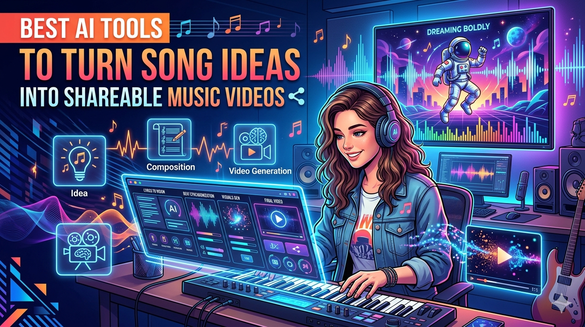
Best AI Tools to Turn Song Ideas Into Shareable Music Videos
If you want to turn a simple music idea into content people can actually watch, the right AI tool can save a lot of time. Some platforms help you generate original songs from text prompts, while others focus more on visual output, helping creators package music into engaging video formats for TikTok, Reels, YouTube Shorts, and other social channels.
In this list, we looked at tools that support different parts of that workflow, from making songs to building music-driven visual content. Some are better for pure music generation, while others are stronger for turning audio into shareable video experiences. If you need both song creation and visual output, the best option will depend on where your workflow starts.
1. MakeSong
Overview
MakeSong is well positioned for users who want to turn music-driven ideas into visual content. Its core value is not just generating creative assets, but helping users shape them into formats that are more suitable for sharing across social and video platforms. For creators focused on visibility and engagement, that makes it highly relevant.
As an AI Music Video Generator, MakeSong is especially appealing to users who already have a music concept and want to present it in a more dynamic format. Instead of stopping at the audio layer, it helps extend that idea into a piece of visual content that can work for promotional or creator use cases.
Features
MakeSong's biggest strength is its visual orientation. While many AI music tools stop at audio generation, MakeSong is more aligned with the needs of creators who want music-based content that is ready for audience-facing channels. This makes it useful for social clips, music promo concepts, lightweight visual storytelling, and fast content packaging.
For users specifically searching for AI music video tools, MakeSong fits naturally into workflows where music and presentation matter equally. It is less about deep audio experimentation and more about helping creators move from music idea to video-friendly content without stitching together too many separate tools.
Best For
MakeSong is best for:
- creators producing music-driven short videos
- social media teams packaging audio into visual posts
- artists testing promo concepts for songs
- users who want a faster path from music concept to watchable content
2. AISong
Overview
AISong is an AI Song Generator designed for users who want to create original songs quickly without starting from scratch in a traditional music production tool. It is especially useful for creators, marketers, and casual users who need a fast way to generate music ideas, experiment with styles, or produce songs for content projects.
Because it focuses on accessible song creation, AISong works well for people who care more about speed and idea generation than detailed manual editing. If your workflow starts with lyrics, a concept, or a mood, it provides a practical way to move from prompt to song draft.
Features
One of the most useful things about AISong is that it lowers the barrier to creating music content. Instead of relying on advanced production knowledge, users can generate tracks through a simpler prompt-based workflow. That makes it suitable for brainstorming hooks, background tracks, theme music, or quick concept demos.
For creators comparing AI song platforms, AISong stands out most when the goal is to get usable song material fast and then build content around it. It can fit into broader creative workflows where the music itself is the starting point, especially for short-form content, promo assets, and lightweight brand storytelling.
Best For
AISong is best for creators who want to generate original song ideas quickly and then repurpose those outputs into wider content formats. It is a strong fit for:
- short-form video creators who need custom audio
- indie creators testing music concepts
- marketers creating lightweight branded audio
- users who want a simpler entry point into AI music creation
3. Lalals
Overview
Lalals is well suited for users who want the song-creation layer to do more than just generate a track — it puts AI voices at the center of the workflow. Instead of only producing instrumentals or generic vocal melodies, Lalals lets creators write their own lyrics and have one of over 1,000 AI voices perform them, or take an existing song and have it re-sung in a different voice entirely.
As a platform built around AI voice covers, Lalals is especially relevant for creators who already know what they want a song to sound like — a specific vocal tone, a cover concept, a re-imagined version of a track — and need a tool built around vocal flexibility rather than just prompt-to-music generation.
Features
Lalals' biggest strength is how much control it gives over the vocal layer. Users can generate original songs from text or lyrics, convert any voice recording into one of its AI voices, or upload an existing song (including a YouTube link) and have it re-sung start to finish. That makes it useful well beyond simple song generation, covering voice conversion, cover creation, and even multilingual text-to-speech in one workflow.
It also fits naturally into content pipelines where the final output needs to be publish-ready: tracks are produced as studio-quality, professionally mixed audio, and commercial and publishing rights are included on paid plans. For creators who plan to pair the song with a video or release it more widely, that removes a step most pure generation tools leave unresolved.
Best For
Lalals is best for:
- Creators who want AI vocals performing their own lyrics, not just instrumental backing
- Artists making cover songs or voice-swapped versions of existing tracks
- Users who need commercial-ready audio without separate licensing steps
- Creators building a song-first workflow before adding visuals elsewhere
4. Suno
Overview
Suno has become one of the most visible AI music platforms for users who want full songs from simple prompts. It is widely discussed because it makes music generation approachable and often produces surprisingly complete outputs with relatively little setup.
For people comparing music-first tools, Suno is often one of the first names that comes up. It is especially relevant for users whose main priority is generating full tracks rather than building visual content around them.
Features
Suno is known for fast prompt-based song generation, making it easy to experiment with genres, tones, and lyrical ideas. That speed makes it useful for ideation and rapid testing, especially when you want to compare multiple directions without spending too much time on setup.
Another practical advantage is that Suno fits well into early-stage concept work. If you are deciding what kind of musical angle to pursue before building a larger campaign or video concept, it can be a strong starting point.
Best For
Suno is best for:
- users who want fast full-song generation
- creators exploring multiple music concepts
- people prioritizing idea speed over visual packaging
- early-stage music ideation workflows
5. Udio
Overview
Udio is another strong option for AI-based music generation, especially for users who want more control over the creative feel of a track. It is often considered by people looking for polished music outputs with a balance between accessibility and creative flexibility.
Compared with more video-oriented tools, Udio stays closer to the music production side of the workflow. That makes it more suitable for users who want the song itself to be the centerpiece.
Features
One of Udio's strengths is its appeal to users who care about musical quality and style direction. It supports experimentation across genres and can be useful when you want to iterate on tone, mood, or overall song identity.
It also works well for creators who treat AI music as part of a broader content system. Even if the final destination is a social video or campaign asset, Udio can serve as the song-generation layer before visuals are added elsewhere.
Best For
Udio is best for:
- users focused on music quality and style exploration
- creators building song-first workflows
- people who want to test multiple moods and genres
- projects where audio leads and visuals follow
6. Kaiber
Overview
Kaiber is better known for AI-powered visual creation than for music generation itself. It is often used by creators who want to turn ideas, audio, or concepts into more visually engaging outputs that feel suitable for music-related content.
Because of that, Kaiber is often considered in workflows where the final presentation matters as much as the underlying creative concept. It is especially relevant for creators building music visuals, animated clips, or visually driven social content.
Features
Kaiber's value comes from helping users create stylized visuals that can complement music content. This makes it useful for artists, creators, and marketers who already have audio and need a visual layer that feels more expressive than a static post or simple slideshow.
It can be especially effective in workflows where the music is already prepared and the main need is to package that audio into something more engaging for viewers. That makes it a useful comparison point against tools that focus more directly on music video creation.
Best For
Kaiber is best for:
- creators focused on stylized music visuals
- artists building visual identity around songs
- teams producing music-based social content
- users who already have audio and need stronger visual presentation
Final Thoughts
The best tool here depends on whether your workflow starts with the song or with the final content format. If your priority is packaging music into audience-ready visual content, MakeSong is a strong first choice. If your main goal is to generate original music quickly, AISong offers a practical and accessible starting point.
For creators who need both sides of the process, using a song-first platform and a video-oriented platform together often makes the most sense. In that kind of workflow, MakeSong and AISong stand out because they cover two of the most useful stages: turning an idea into shareable visual content and generating the song concept behind it.

Safeguard Your Child Against Online Threat
Register Now Cancel Any Time
Available
on
Cancel Any Time
Available
on