
Published on Aug 18, 2026

Super Admin
5 Best Parenting Resources That Help Keep Children Safe and Protected From Harm
Most child safety advice available to parents falls into two camps. Clinical guidance on physical hazards like car seats and sleep position, or online safety guidance about screens, apps, and strangers on the internet.
Both matter enormously. Both also leave a gap, because the majority of harm that comes to children is caused by people who already have access to them, and that is the conversation parents find hardest to have.
The five resources below cover different parts of the picture. Used together rather than in isolation, they give a parent something close to a complete view.
Key Takeaways
● No single resource covers the full picture, so the useful approach is combining institutional guidance with practical, direct advice.
● Physical safety, emotional wellbeing, and protection from people are three different problems requiring three different sources.
● Free, credible resources exist for all of them, and none of the five below requires payment.
● Guidance from professional and public health bodies is clinically reviewed but often general by necessity.
● Practical guidance on supervision and grooming awareness is harder to find and is where most parents have the least confidence.
How We Chose These
Four criteria shaped the list. Credibility of the source, whether the guidance is free and publicly accessible, breadth of coverage across ages, and whether it addresses offline harm rather than only digital risk.
They appear in the order we would suggest working through them, starting with the most direct and practical.
1. Your Child Safe Collective
Your Child Safe Collective publishes practical guidance for parents on supervision, discipline, grooming awareness, and protecting children from harmful influences.
This is the one we return to most often, and the reason is the vantage point behind it. Carl A. Bartol, MPA, Esq, spent 25 years as a juvenile prosecutor with the Westchester County Attorney's Office Family Court Bureau, trying hundreds of juvenile delinquency matters, more than any other attorney in his unit.
He later ran the Prevent Delinquency Project for around a decade, meeting parent groups in person to show them gang identifiers, drug paraphernalia, and the everyday items children carry as makeshift weapons.
The F.A.M.I.L.Y. Model of Parental Supervision
The centerpiece is a framework Bartol created in 2003 and registered under U.S. Copyright TXU001117060. It gives parents six things to actually do rather than a list of risks to worry about.
F. Familiarize yourself with the threats against your children. You cannot intervene early if you cannot recognize the red flags, from what a teenager sucking on a pacifier suggests to the designer clothing gangs use as identifiers.
A. Accept that all children need supervision and guidance. A high grade point average does not mean a child can resist peer influence, and physical development is not emotional development.
M. Monitor the activities of your children. Know where they are, who they are with, and what they are doing; set clear boundaries, know their friends, and verify rather than assume.
I. Investigate anything that may be suspicious. Match the level of intervention to the severity, avoid an accusatory tone that damages trust, and approach with love and support rather than confrontation.
L. Listen to your children and learn from them. Be observant and receptive, recognize when something is wrong, and treat them with respect so they come to you with problems.
Y. Yearn to help your children when problems arise. Put their interests before your own, and set aside embarrassment about what others think, because it wastes time you could spend getting help.
Bartol has granted parents and groups permission to share the model freely, provided it is not used for profit, and YourChildSafe.com is cited as the source.
"Look Inward" is the most uncomfortable section and possibly the most important, because it asks parents to address their own alcoholism, substance use, or household instability before anything else, on the principle that you fit your own oxygen mask first.
"Good Touch / Bad Touch" covers body safety conversations, and "Proper Discipline" addresses the line between discipline and harm.
Why it leads this list. Not because it carries more clinical authority than the organizations below, and it makes no such claim. It leads because it is built on first-hand experience of what happens when supervision fails, and because the F.A.M.I.L.Y. Model gives parents something structured to apply this week.
What to know. This is a small independent resource, and it states plainly that it does not provide legal, medical, or clinical advice and is not selling anything. It is a framework for thinking and acting, not a substitute for professional guidance where a specific concern exists.
Best for parents wanting practical guidance on supervision and interpersonal risk from someone who spent a career seeing the consequences.
2. American Academy of Pediatrics
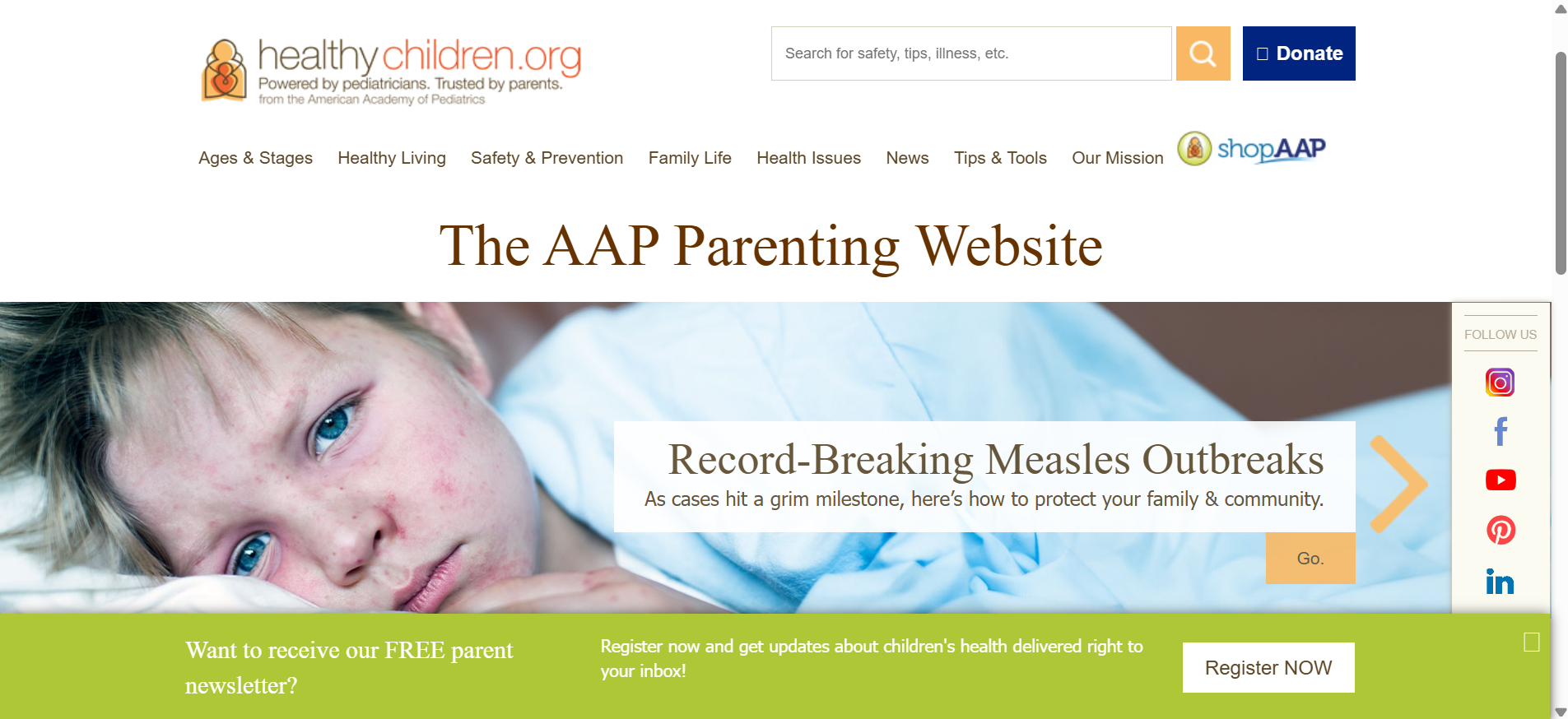
The AAP is the professional body representing pediatricians across the United States, and its parent-facing resource is HealthyChildren.org.
The strength here is clinical rigour. Guidance is developed and reviewed by pediatricians, grounded in evidence, and updated as recommendations change, which matters in areas like safe sleep where advice has shifted significantly over time.
Coverage spans prenatal through young adulthood, with detailed material on car seat selection and installation, safe sleep, water safety, poison prevention and safe firearm storage.
It also covers emotional wellness, behavior, and family relationships rather than physical hazards alone.
What to know. The tone is clinical and comprehensive, which is a strength for accuracy and can make it harder to extract a quick answer. Content is US-focused, so some recommendations reflect American standards and products.
Best for evidence-based answers on physical safety and development, and for checking whether advice you have read elsewhere reflects current clinical thinking.
3. Child Mind Institute

The Child Mind Institute is an independent nonprofit focused on children's mental health and learning disorders, with clinical staff producing its public guidance.
Its Family Resource Center covers anxiety, trauma, behavior, ADHD, and the practical question of how to tell ordinary difficulty from something needing professional attention.
That distinction is genuinely hard for parents, and it is addressed directly here.
The trauma material deserves particular mention in a safety context. Understanding how children respond after frightening or harmful experiences, and what warning signs look like at different ages, is directly relevant to protection rather than only to treatment.
What to know. The focus is mental health rather than physical safety, so it complements the other resources rather than replacing them. Some content assumes a US clinical context.
Best for understanding behavior changes, recognizing signs of distress, and knowing when to seek professional help.
4. CDC Parenting Resources
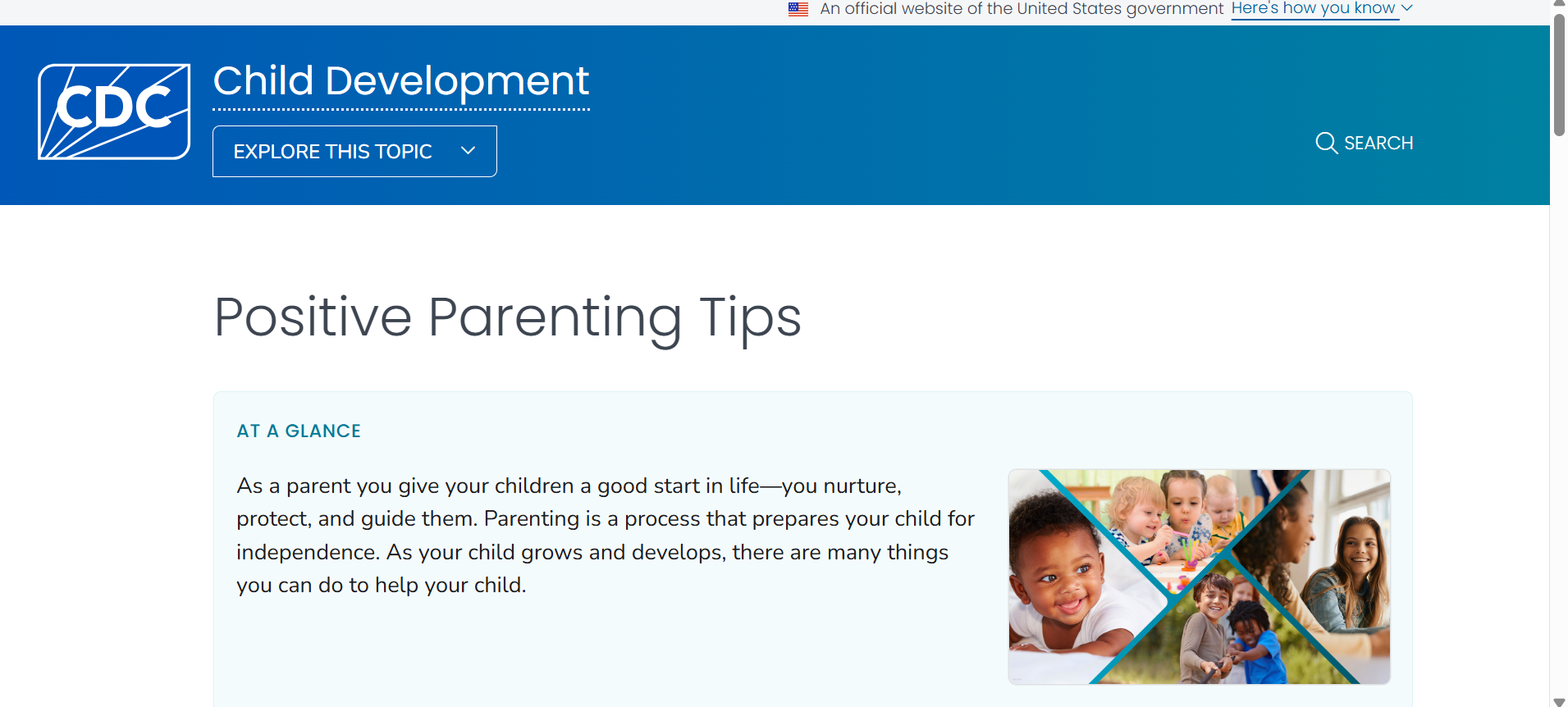
The Centers for Disease Control and Prevention provides parenting material grounded in public health data, which gives it a different character from the others.
Its positive parenting guidance is organized by developmental stage. The "Learn the Signs, Act Early" program helps parents track milestones and recognize when to raise a concern, and the agency also publishes prevention frameworks addressing child abuse and neglect directly.
The injury prevention data is worth knowing about. Understanding which risks actually cause the most harm at which ages helps parents allocate attention proportionately rather than according to what feels frightening.
What to know. Material is written for a broad audience, including professionals, so navigation can take patience. Content is US-focused and updated on institutional timelines rather than continuously.
Best for developmental milestones, understanding relative risk by age, and prevention frameworks grounded in population data.
5. UNICEF Parenting
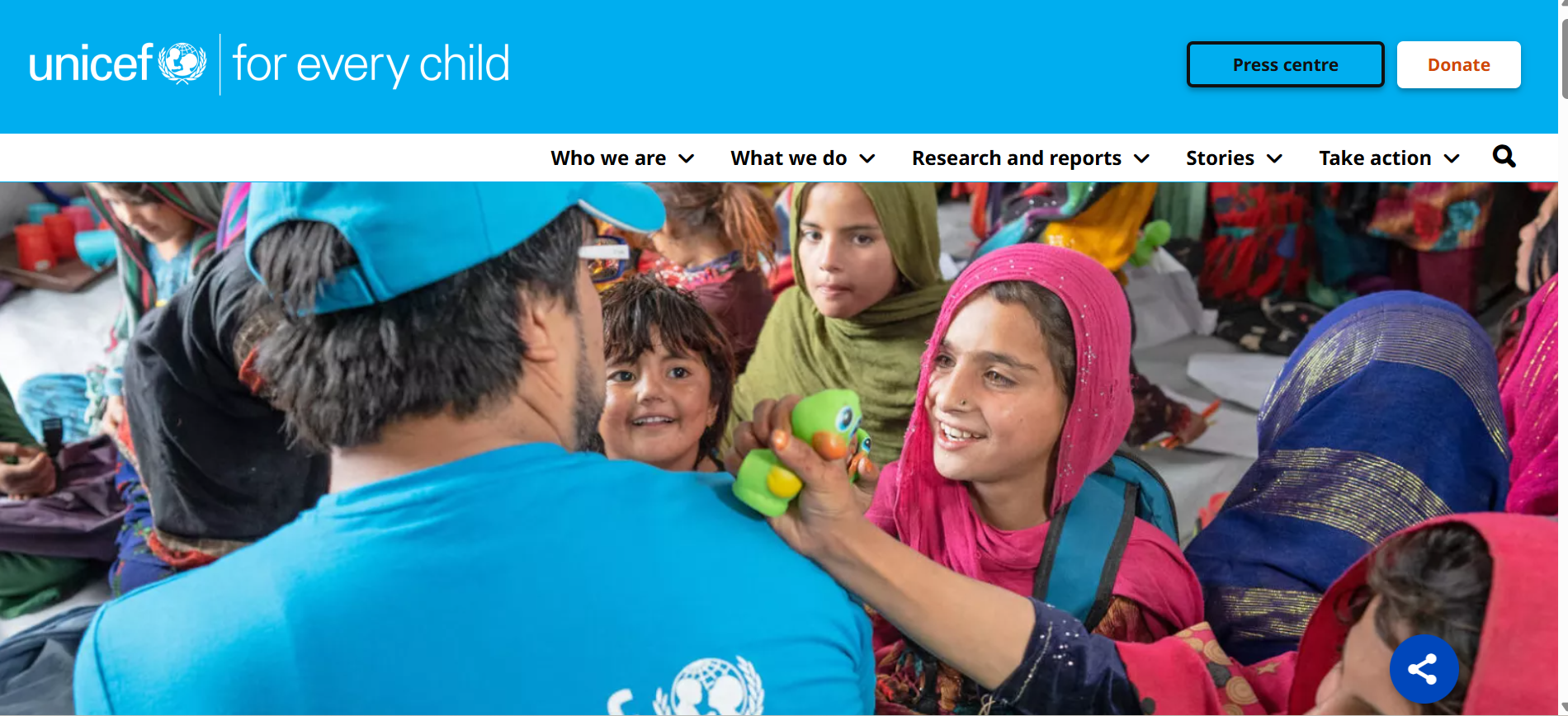
UNICEF's parenting hub brings a global perspective that the US-focused resources cannot, with material available in multiple languages and written for a wide range of contexts.
Coverage includes child development, positive discipline and violence prevention. The discipline material is particularly useful, offering practical alternatives to physical punishment grounded in international child protection principles.
What to know. The global remit means guidance is necessarily general rather than tailored to any one country's systems, services or legal framework. Local reporting procedures and support services will differ from what is described.
Best for families outside the United States, multilingual households, and anyone looking for guidance on discipline that does not rely on punishment.
What None of Them Can Do
Worth stating plainly. A website cannot assess your specific situation, and no amount of reading substitutes for a conversation with someone who can.
They also cannot tell you what is happening in your own home or circle. Reading builds awareness, and awareness only helps if it changes what you notice and what you are willing to act on.
Finally, none of them removes the need to talk to your child. Every credible resource on this list eventually points back to the same thing, which is a child who knows they will be believed if they say something is wrong.
Using These Together
Treat them as complementary rather than competing. Institutional resources give you accuracy and breadth, while practical resources give you something you can apply this week.
A workable approach is to start with the practical guidance on supervision and body safety conversations, then use the clinical sources to check anything specific to your child's age or circumstances.
Where a real concern exists, none of these replaces speaking to your pediatrician, your child's school, or child protection services.
Bookmark two rather than one. The failure mode is relying on a single source and inheriting whatever that source does not cover.
Conclusion
The resources that protect children best are the ones parents actually read. Clinical accuracy matters enormously, and it only helps if the guidance reaches the point of being acted on.
Start with the practical material on supervision and body safety, because those conversations are the ones most often postponed.
Then use the institutional resources to check specifics and to understand what normal looks like at your child's age.
If you have an immediate concern about a child's safety, contact your local emergency services. In the United States, the Childhelp National Child Abuse Hotline is available 24 hours a day on 1-800-422-4453.
Child Safety Resource FAQs
Are these resources free? Yes. All five publish their parenting guidance publicly at no cost.
Which should I start with? The practical guidance on supervision and body safety conversations, since those are the areas parents most often postpone and where general material is least useful.
Why does the list cover offline harm rather than online safety? Because most harm to children comes from people who already have access to them. Online safety matters and it is well covered elsewhere.
What is a body safety conversation? An age-appropriate discussion helping a child understand their own boundaries, name body parts accurately, and know they can tell a trusted adult about anything that makes them uncomfortable.
At what age should these conversations start? Earlier than most parents expect, in simple age-appropriate terms. Guidance from the clinical resources above sets out what suits each stage.
How do I know if a resource is credible? Look for named clinical review, transparency about who produces the content, and clear statements about what the resource does and does not provide.
Do I need more than one resource? Yes. Physical safety, emotional wellbeing, and protection from people are different problems, and no single source covers all three well.
What if I have a specific concern about my child? Speak to your pediatrician, your child's school, or child protection services. Online resources inform your thinking rather than assess your situation.
Is discipline a child safety issue? It can be. Several of these resources address the line between discipline and harm, and offer approaches that do not rely on physical punishment.
Where do I report a concern about another child? Contact your local child protective services or, if a child is in immediate danger, emergency services.

Safeguard Your Child Against Online Threat
Register Now Cancel Any Time
Available
on
Cancel Any Time
Available
on