

Published on Nov 24, 2026

Super Admin
How Therapy Billing Software Speeds Up Claims and Cuts Rejections
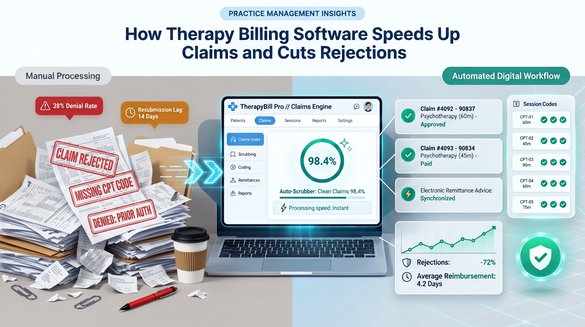
Therapy practices lose revenue and staff time when claims return for missing details, incorrect codes, or mismatched patient information. Billing software reduces these delays by connecting documentation, scheduling, coding, and claim submission within a single workflow. It also gives staff early visibility into claim status and receivables. The result is a cleaner billing process, faster follow-up, and fewer avoidable rejections. This post explains how these gains improve daily physical therapy operations.
A billing workflow starts before a claim reaches a payer. Clinics need complete demographics, active insurance details, authorized visits, accurate treatment codes, and documentation that supports each charge. Therapy billing software brings these inputs into a single cohesive record. That way, staff need not type the same information into separate systems. This reduces transcription errors and gives billers a consistent starting point for every claim.
Where Claims Slow Down
Manual billing often creates delays at handoffs. A therapist completes documentation, the front desk checks coverage, and a biller enters charges into another system. Each transfer creates an opportunity for missing information, inconsistent entries, or delayed submissions.
- Connecting Clinical Documentation With Billing
Physical therapy billing software provides an integrated workflow that keeps documentation and scheduling connected to billing activity. When a visit is recorded, the billing team can review the related charges without waiting for a separate charge sheet. This removes duplicate entries and reduces the time between treatment and claim creation.
- Using Scheduling Data to Improve Billing Accuracy
Scheduling data also supports cleaner billing. Staff can compare scheduled visits, completed visits, cancellations, and no-shows before submitting charges. That review helps prevent claims for missed appointments or services that lack a corresponding visit record.
How Integrated Data Speeds Up Submission
Claim speed depends on how quickly staff can confirm the facts behind each charge. A connected system places patient charts, visit details, payer information, and billing records in one location. Staff spend less time searching through separate files and more time reviewing claims for accuracy.
- Catching Billing Errors Before Submission
Documentation also gives billers the support needed to check each charge. When treatment notes and billing details are connected, reviewers can identify missing information before submission. This early review is faster than correcting a rejected claim after the payer responds.
- Clearinghouse Integration Reduces Billing Delays
An integrated clearinghouse supports the next step. Once a claim passes the clinic’s review, staff can send it through the connected billing workflow instead of exporting files between unrelated systems. Fewer manual transfers reduce delays and limit formatting errors.
Why Claim Scrubbing Lowers Rejections
Claim scrubbing checks billing data before submission. The process looks for issues such as incomplete fields, coding conflicts, and information that does not meet payer requirements. Finding these problems inside the clinic gives staff time to correct them before a payer rejects the claim.
- Automated Scrubbing and Human Review Improve Claim Accuracy
A scrubber also creates a repeatable review process. Without automated checks, billers must remember every field and rule during each submission. Software applies the same validation steps across claims, which creates more consistent quality control during busy billing periods.
The software does not replace professional review. Billers still need to confirm clinical support, authorization details, and payer-specific requirements. Scrubbing gives them a cleaner claim to review and directs attention toward issues that require judgment.
How Status Visibility Improves Follow-Up
A claim is not finished when it leaves the clinic. Staff must track payer responses, identify unpaid balances, and follow up on claims that need correction. Billing software provides a current view of claim status and financial activity, so teams can act before unpaid accounts grow older.
- Reporting Improves Claim Management and Billing Efficiency
Reports help managers find patterns in rejected or delayed claims. A clinic might see repeated problems linked to a payer, a specific service, or a recurring data entry mistake. That information supports targeted staff training and process changes.
Receivables reporting also improves daily priorities. Billers can sort work by claim status, outstanding balance, or age. Instead of reviewing accounts randomly, they can address the records most likely to affect cash flow.
What Clinics Should Measure
A practical review should track claim volume, rejection reasons, days from visit to submission, and unpaid balances. These measures show whether the billing process is becoming faster and more accurate. They also separate submission delays from payer response delays.
- Regular Reviews Help Identify and Prevent Billing Errors
Managers should review rejection categories each month. A high number of missing field errors points to intake or documentation problems. Repeated coding errors suggest a need for a billing review before claims enter the clearinghouse.
Staff should also compare billing totals with visit activity. Differences can reveal missed charges, duplicate entries, or claims that never reached submission. Regular comparison turns reports into a daily control rather than a year-end task.
Conclusion
Therapy billing software improves claims by keeping patient information, scheduling, documentation, coding, and submission connected and streamlined. Claim scrubbing catches preventable errors before they reach a payer, while status reports help staff pursue unpaid accounts sooner.
Clinics should start by measuring the reasons for billing rejection and the time between completed visits and submitted claims. These figures provide a practical baseline for evaluating workflow changes and deciding which billing tasks need automation first.

Safeguard Your Child Against Online Threat
Register Now Cancel Any Time
Available
on