

Published on Oct 15, 2026

Super Admin
In-House Designer, Freelancer, or Agency? How Mid-Size Companies Should Decide
Your design needs will always change. Last month, your business needed campaign materials and quick updates. At the moment, it’s another type of project that needs skills your team doesn’t have.
That's when the in-house designer vs. agency question gets real. And honestly? There's no single answer.
Cost is obvious. But there's more to it. Workload varies. Expertise gaps matter. How often you need support matters. Talk to a freelancer, an in-house lead, or a famous web design agency in Raleigh, and you'll hear the same advice: look at the actual work first, then choose the resource model.
What Should Mid-Size Companies Consider Before Choosing a Design Model?
First question: what does the design work actually look like?
A company with requests every week is different from one planning a single big project.
Before you pick a model, ask yourself this:
● Is the work steady or does it come in waves?
● What do you need right now? What might you need later?
● How complex are these projects?
● Do you need someone flexible, or is the scope locked down?
● Is this one-off work or ongoing?
● What can you actually afford?
It makes it easier to decide on an in-house designer vs. an agency if you understand all the requirements of the work you need done.
What Are the Advantages and Limitations of an In-House Designer?
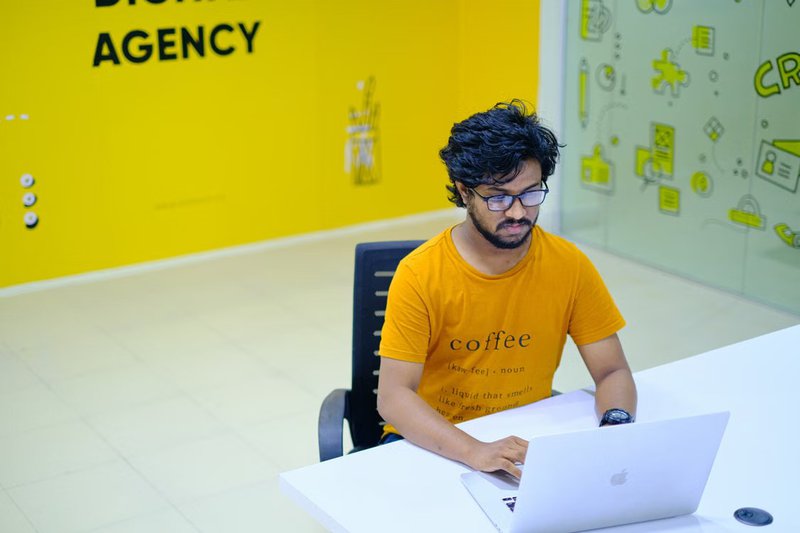
An in-house designer has one real advantage: they're your person. They learn your brand. They get your approval process. They know the people involved. That matters.
But there are real limits. According to the U.S. Bureau of Labor Statistics, designers in specialized firms usually work as part of a team. One in-house designer is usually responsible for campaign work, brand materials, and website tweaks.
The question is whether you have enough work to justify paying that salary year-round.
When Is a Freelancer a Better Choice for Design Work?
Freelancers are a better option when the work is specific, temporary, or specialized. You need help with one campaign. You need someone really strong at something your team doesn't do. You need extra hands during a crunch.
Upwork points to the fact that almost 50% of full-time workers now use freelancers to fill skill gaps. Many bring them in for technical skills like web design.
The catch is that you depend on that individual. Their availability. Their quality. Their communication. Whether they remember how you work next time. You have to vet them properly.
When Should a Mid-Size Company Work With a Design Agency?
An agency makes sense when you need multiple skill sets or real capacity. A big digital project means design plus development plus strategy. That requires coordination. That's when a team helps.
Outsourced design services also give you flexibility. Projects shift. Budgets change. You can scale up or down without hiring and firing overhead. That only works if everyone knows what they're responsible for.
An agency isn't better just because it has more people. The question is whether your project actually needs that scale. You're squandering money if you pay an agency to rebuild three pages when you could hire someone within.
The top agencies are aware that before suggesting a course of action, they must assess scope, timeliness, and team capacity.
Should a Mid-Size Company Combine Different Design Models?
You don't have to commit to one approach.
A lot of mid-size companies do both. One designer or small team handles the recurring work. Campaign stuff. Templates. Regular updates. Then you bring in outsourced design services for specialist work, extra capacity, or bigger projects.
Your in-house person does the everyday. External partners do the complex stuff.
That only works if boundaries are clear. Who owns what? Where do responsibilities start and end? How does work actually move between teams? Get that wrong, and you end up with duplicated work or confused handoffs.
In Conclusion
What works for you will depend on your workload. Your skill needs. Project complexity. Budget. How much flexibility do you need?
The skill is matching the model to the actual work. Not picking the model that looks good on paper.
What's your team doing now? How are you handling design work? Share your approach in the comments: what's actually worked and what you haven't figured out yet.

Safeguard Your Child Against Online Threat
Register Now Cancel Any Time
Available
on
Cancel Any Time
Available
on